

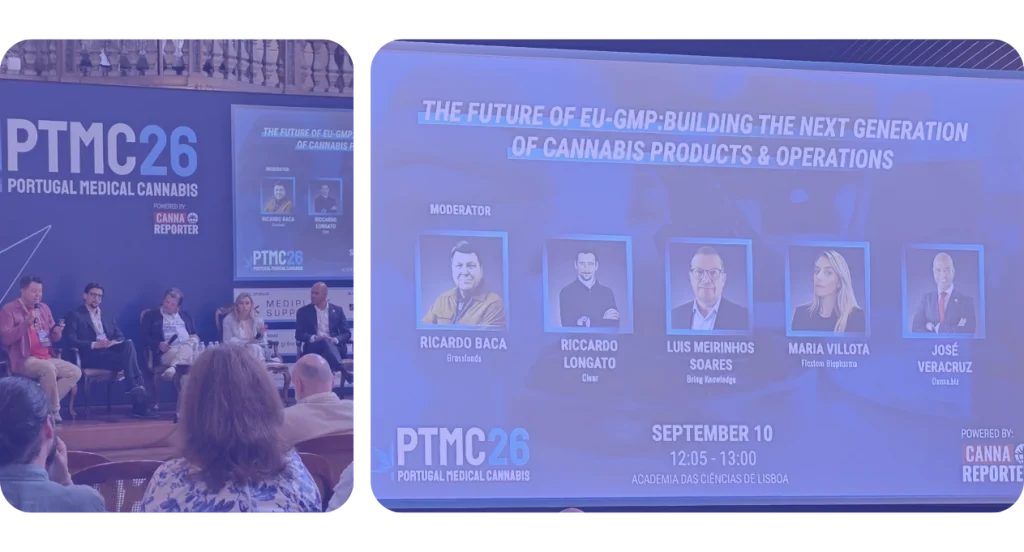
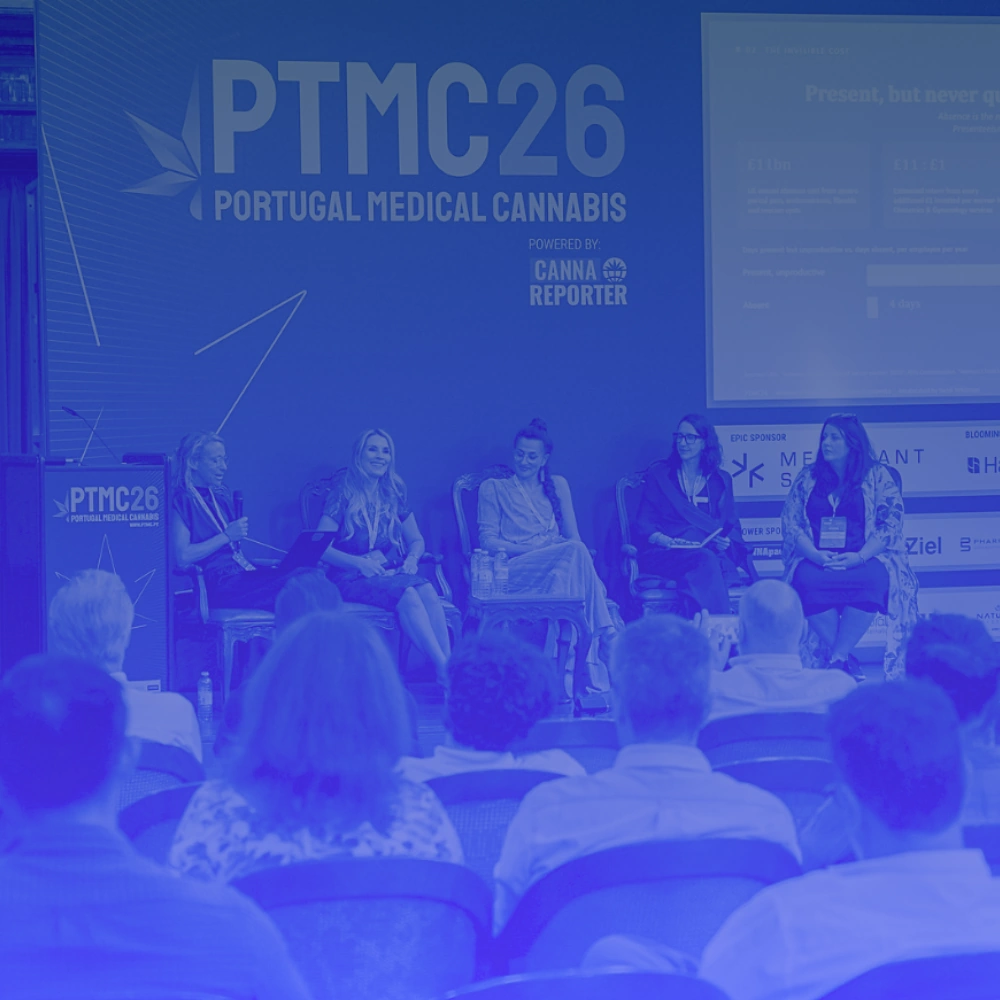
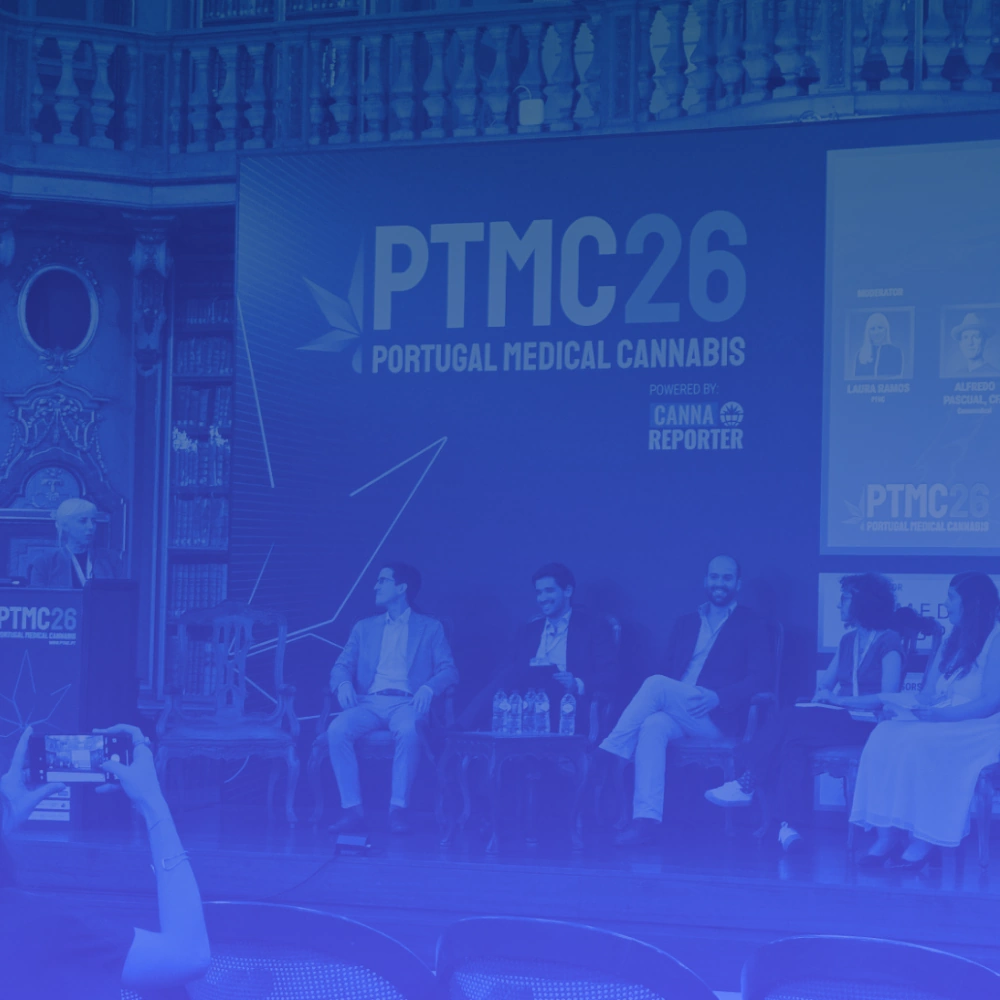
Erkenntnisse aus einer Podiumsdiskussion bei PTMC – Portugal Medical Cannabis vom 10. September 2026. Panelteilnehmer: Riccardo Longato (Clear), Luis Meirinhos Soares (Bring Knowledge), Maria Villota (Flextem Biopharma) und José Veracruz (Canna.biz). Moderiert von Ricardo Baca (Grasslands). Foto: Renato Velasco
Die Produktion wurde offiziell zu einem Gewerbe
In einem Panel mit dem Titel “Die Zukunft von EU-GMP: Die Entwicklung der nächsten Generation von Cannabisprodukten und -prozessen” unter PTMC (Portugal Medical Cannabis) 2026, Die vier Regulierungs- und Qualitätsexperten eröffneten mit zwei Zahlen, die unvorteilhaft nebeneinander platziert werden sollten.
In den ersten sechs Monaten von 2026:, Portugal exportierte 66.000 Kilogramm medizinischen Cannabis, Während er in jenem Fenster etwa 5.000 Hausrezepte verfasst, ist ein Land, eine Lieferkette und zwei völlig unterschiedliche Beziehungen zu derselben Pflanze. Moderator Ricardo Baca, Gründer der Cannabis-Kommunikationsagentur Grasslands und ehemaliger 25-jähriger Journalist bei der Denver Post, stellte die gesamte Diskussion in diesem Zusammenhang dar: Portugal hat in den letzten zehn Jahren eine Exportmaschine für Arzneimittel aufgebaut, und das Handbuch, auf dem diese Maschine funktioniert, wurde gerade neu geschrieben.
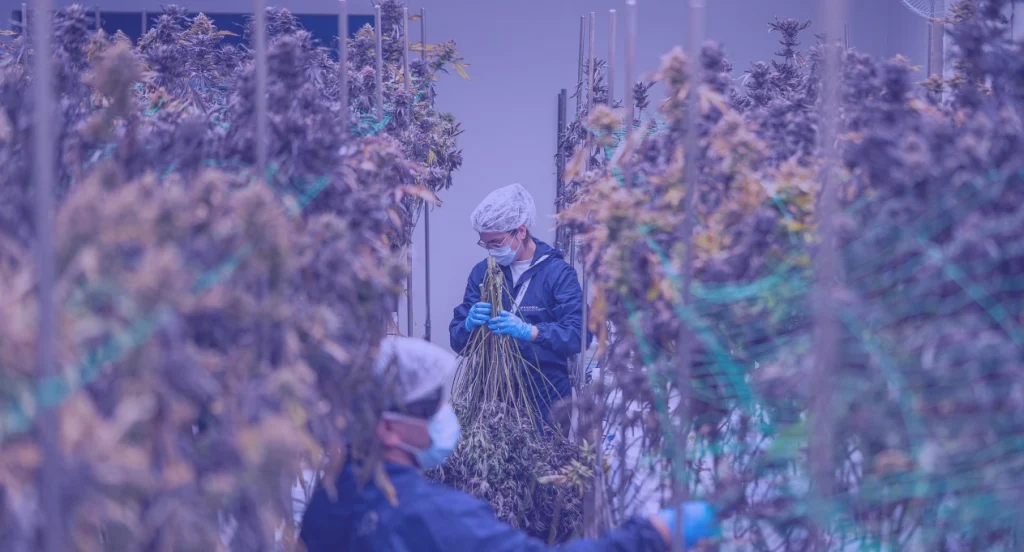
Diese Neufassung ist nicht nur ästhetisch ansprechend. Zum ersten Mal wurde der Anbau ordnungsgemäß in die gleiche regulatorische Logik wie die Produktion integriert, wobei GACP (Good Agricultural and Collection Practice) rückt deutlich den Anforderungen der EU-GMP (Good Manufacturing Practice) näher.
Wie das Gremium wiederholt betonte, handelt es sich bei diesem Erfindungsgegenstand nicht um ein Cannabis-spezifisches Erfindungsgegenstand. GACP regelt die Pflanzenproduktion, solange sie noch Pflanzen sind, von der Anbauphase über die Trocknung bis hin zur Veröffentlichung. EU-GMP übernimmt die Kontrolle von der Verarbeitung bis zur endgültigen Freigabe., Diesem Rahmenwerk, das seit Jahrzehnten die Anwendung von Hunderten anderer Heilpflanzen in Europa regelt, ist nun ein neuer Rahmen hinzugefügt worden. Was sich geändert hat, ist die Art und Weise, wie die Ernte nun erwartet wird, um die Konsistenz der Pflanze zu dokumentieren, zu validieren und zu beweisen – wodurch das, was von mehreren Teilnehmern als die letzte große Grauzone zwischen Feld und fertigem Arzneimittel bezeichnet wurde, geschlossen wird.
Dies ist auch ein Gremium mit ungewöhnlich glaubwürdigen Mitgliedern. Unter ihnen haben die vier Mitglieder des Gremiums an der Seite der Aufsichtsbehörde bei GMP-Inspektionen teilgenommen, Software zur Compliance entwickelt, die in der gesamten Cannabis-Lieferkette Europas eingesetzt wird, die Qualitätssicherung für einen portugiesischen Hersteller von medizinischen Gasen durchgeführt und eine Zertifizierungsstelle mit Sitz in Italien bis hin nach Lateinamerika gegründet. Ihre gemeinsame Urteilsvergabe war scharfsinnig: Die EU-GMP wurde nie so konzipiert, dass sie sich nur aus Eigeninteresse bürokratisch auswirkt, und eine Branche, die weiterhin so behandelt wird, wird auch weiterhin nicht ernst genommen werden können von den Aufsichtsbehörden, Ärzten und Patienten, auf die sie angewiesen ist.
Die Zahlen und Rahmenbedingungen hinter dem Panel
Dieses Gremium beschäftigte sich eher mit der regulatorischen Struktur als mit Dollarzahlen, doch die vorliegenden Fakten waren dennoch konkret:
- Portugal exportierte 66.000 kg Über den medizinischen Cannabisverbrauch in den ersten sechs Monaten 2026 gegen etwa 5.000 In-Haus-Rezepte Im gleichen Zeitraum entstand ein Unterschied, den das Gremium zur Abgrenzung der gesamten Diskussion nutzte, um festzulegen, wem die EU-GMP eigentlich dienen soll.
- Luis Meirinhos Soares, Gründer von Bring Knowledge und ehemaliger GMP-/GDP-Inspektor bei INFARMED seit 25 Jahren, bestätigte dies: Nach den EU-Vorschriften gibt es keine Pflicht zur GACP-Zertifizierung. Die Verantwortung für die Qualifizierung eines Anbaubedarfers bietet der Käufer, und laut ihm steht dies in der eigenen Frage-und-Antwort-Richtlinie der Europäischen Arzneimittel-Agentur ausdrücklich fest.
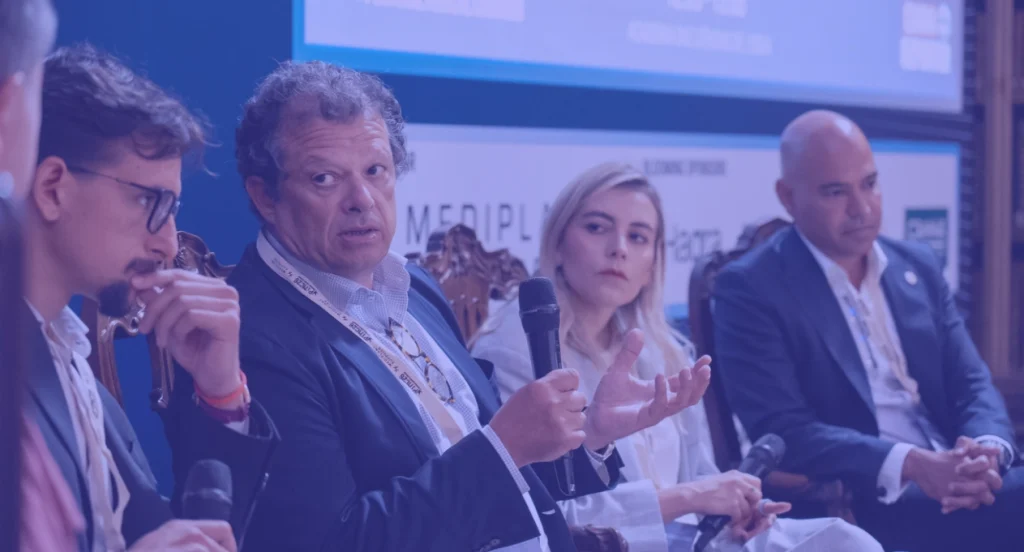
- Riccardo Longato, Mitbegründer des Compliance-Zertifizierungssystems Clear, wies auf eine in dem Lehrbuch enthaltene Arbeitsdefinition hin. Einleitung zur statistischen Qualitätskontrolle (Montgomery): “Qualität ist umgekehrt proportional zur Variabilität.” Je unkontrollierbarer der Prozess, desto variabler und riskanter das Ergebnis, argumentierte er, und dieser Begriff gilt auch direkt für ein biologisch komplexes Produkt wie Cannabis.
- Unter Rahmenwerk der EU-GMP für pflanzliche Arzneimittel in Anhang VII, Die Fachgruppe stellte fest, dass die Kultivierungsstufen nun ausdrücklich unter GACP fallen, da dies nach Anhang VII und EU-GMP erforderlich ist, und nicht weil GACP als eigenständige Norm existiert. José Veracruz stellte eine direkte Verknüpfung zu Anhang VI her, der die medizinischen Gase regelt – den Rahmen, unter dem er über ein Jahrzehnt lang bei Linde Portugal arbeitete, bevor er sich auf die Qualitätssicherung von Cannabis konzentrierte.
- Der Bericht des Gremiums über die letzte große Überarbeitung des Kultivierungsreglements konzentrierte sich auf ein einziges Thema: Die Anforderungen an Sauberkeit, Dokumentation und Validierung für Erzeuger sind deutlich den GMP-Standards näher gekommen., Damit wird die Unklarheit beseitigt, wo GACP endet und GMP beginnt.
5 wichtige Erkenntnisse
- Die EU-GMP existiert für den Patienten, nicht für den Prüfer. Mehrere Panelteilnehmer kamen aus verschiedenen Perspektiven zu demselben Ergebnis: In der ersten Ziffer des Kapitels über das eigene pharmazeutische Qualitätsmanagementsystem der EU-GMP heißt es, dass das Ziel darin besteht, den Patienten zu schützen. Eine Firma, die die Einhaltung der Vorschriften eher als eine Formalität für die Inspektoren betrachtet, statt als ein System, das auf der Person aufgebaut ist, die das Medikament letztendlich einnimmt, hat missverstanden, was sie zu leisten hat.
- Konsequenz, nicht Perfektion, ist das eigentliche GMP-Mandat. Die Jury war sich einig, dass GMP keine unzumutbare Präzision bei jedem Eingabedatenpunkt erfordert. Was sie jedoch verlangt, ist ein definierter, dokumentierter Arbeitsbereich, den ein Unternehmen nachweisen kann, dass es die gleiche Logik, die bereits vor der Ankunft von Cannabis bei Hunderten anderer Heilpflanzen angewendet wurde, wiederholt, Batch für Batch.
- Die Grenze zwischen GACP und GMP verschwindet. Mit dem neuesten Anbauvorschriftenwerkzeug sind die Anforderungen an Sauberkeit, Dokumentation und Validierung für Anbauer deutlich näher an den vollständigen GMP-Standards angekommen. Mehrere Teilnehmer argumentierten, dass der Anbau einfach direkt in Anhang VII der GMP aufgenommen werden sollte, wodurch die Unklarheit vollständig beseitigt würde.
- Die Verantwortung für die Qualität der Lieferanten liegt beim Käufer, nicht beim Zertifizierer. Nach EU-Recht besteht keine zwingende GACP-Zertifizierung. Wenn ein Hersteller angebautes Cannabis kauft, liegt die rechtliche Verantwortung dafür, zu bestätigen, dass der Lieferant die erforderlichen Standards erfüllt, bei dem Hersteller selbst, nicht bei irgendwelchen Drittmarken auf den Dokumenten.
- Unsauberes wissenschaftliches Englisch ist ein Problem der Glaubwürdigkeit, keine Frage des Stils. Begriffe wie “Stamm”, “Kurzzeitwirkung” und unbestimmte Terpener-Erwähnungen haben weder in der wissenschaftlich geprüften Literatur noch in der harmonisierten regulatorischen Praxis Grundlage. Das Gremium argumentierte, dass die Branche, die weiterhin auf Konsumentenmarketingbegriffe statt pharmazeutischer Terminologie setzt, es für Regulierungsbehörden und Ärzte erschwert, medizinisches Cannabis ernst zu nehmen.
Bemerkenswerte Zitate aus dem Panel
"Die Kampagnenplakate, die letztendlich Cannabis zur Erwachsenenkonsumierung in Colorado legalisierten, enthielten zwei Worte: 'Regulierung funktioniert'. Das war die Botschaft, die letztendlich bei den Wählern, bei den Verbrauchern und bei den Patienten ankommen konnte."
Ricardo Baca, Gründer, Grasslands (Moderator)
"Das Papier spart Ihnen Zeit. Wenn es ein Problem gibt, suchen Sie nach einem Papier – Sie wollen diese Informationen haben. Erstens glaube ich, dass das hier den Ausschlag gibt. Man verpasst diese Phase des Gehens, bevor man läuft."
José Veracruz, Leiter der Qualitätssicherung / QP, Canna.biz
"Bei medizinischen Gasen gibt es Anhang VI, der alles abdeckt – von der Luft, die wir zur Herstellung des Gases verwenden, bis hin zu dem fertigen Arzneimittel. Warum also nicht GACP in Anhang VII einbeziehen? Dann könnte diese Diskussion über GACP, GMP, ob ich sie durchführen kann oder nicht, aufhören."
José Veracruz, Leiter der Qualitätssicherung / QP, Canna.biz
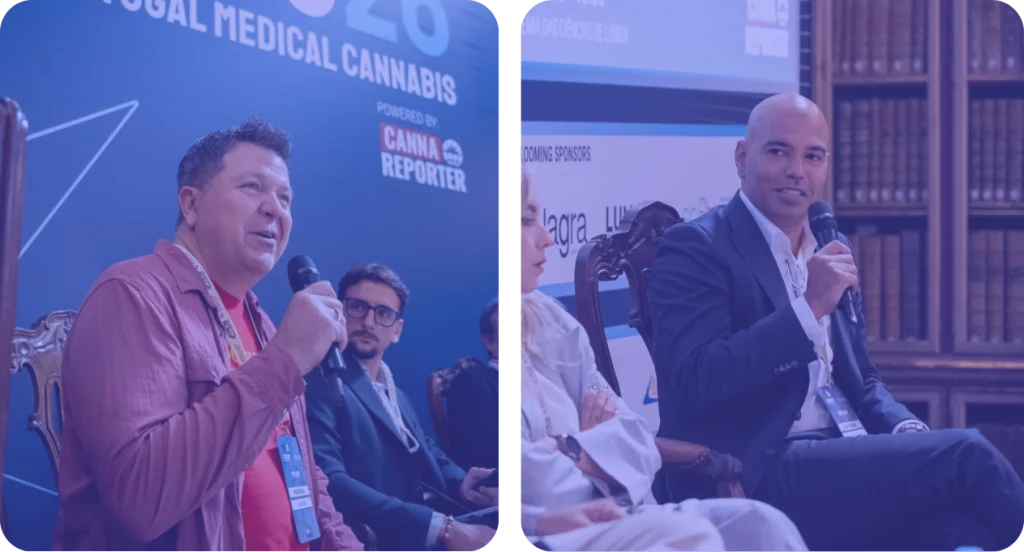
"GMP betrifft nicht Sie, es geht nicht um die Geräte, nicht um die Blumen. Es geht um den Patienten. Alle Vorschriften und die Anweisungen in diesen Richtlinien dienen dazu, den Patienten auf irgendeine Weise zu schützen und sicherzustellen, dass man dies konsequent durchführt."
Luis Meirinhos Soares, Gründer, Bring Knowledge
"Wie können Sie ernst genommen werden, wenn Sie weiterhin eine nicht-harmonisierte Sprache verwenden? Die Strain-Methode ist nicht auf Pflanzen anwendbar, sie gilt nur für Bakterien und Pilze, und Cannabis ist eine Pflanze. Ist das wichtig? Nun, es zeigt, dass Sie eine wissenschaftliche Grundlage haben."
Luis Meirinhos Soares, Gründer, Bring Knowledge

"Wenn man den EU-GMP-Kapitel eins, das Arzneimittelqualitätssystem, öffnet, lauten die ersten Worte: "Ziel ist der Schutz des Patienten.“ Das ist der Anfang von allem. Ohne das gibt es nichts anderes.“
Riccardo Longato, Mitbegründer von Clear
"Qualität ist umgekehrt proportional zur Variabilität. Je unkontrollierbarer ein Prozess ist, desto unkontrollierbarer ist das Ergebnis, und theoretisch könnte die Qualität am Ende im gesamten Prozess viel variabler und riskanter sein."
Riccardo Longato, Mitbegründer von Clear
"Das ist nicht gute Herstellungspraxis, sondern die Sicherheit des Patienten. Diese muss geändert werden. Die Denkweise muss sich ändern, damit wir nicht nur GMP-konform und gute Herstellungspraxis anwenden. Das ist es, was wir mit GMP verstehen."
Maria Villota, COO, Flextem Biopharma
"Wir legen großen Wert auf eine saubere Validierung und auf den mikrobiellen Gehalt. Wir sind keine Cannabis-Firma. Wir sind sauber. Alles ist von Anfang an perfekt."
Maria Villota, COO, Flextem Biopharma

 English (UK)
 Deutsch