
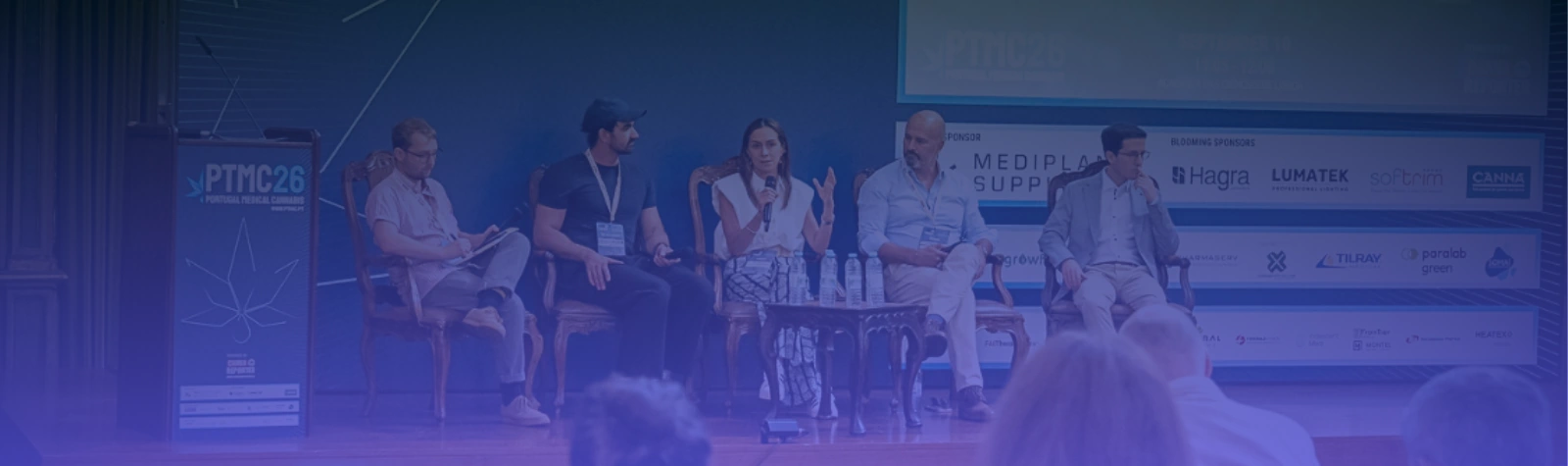
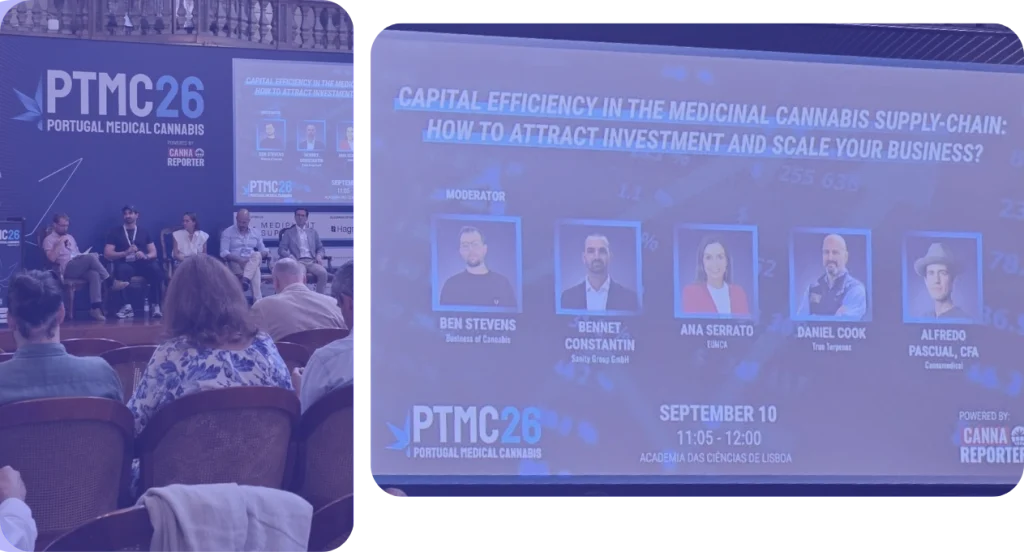
Ergebnisse einer Podiumsdiskussion bei PTMC – Portugal Medical Cannabis am 10. September 2026. Teilnehmer: Bennet Constantin (Sanity Group GmbH), Ana Serrato (Vorsitzende der European Medicinal Cannabis Association (EUMCA)), Daniel Cook (CEO, True Terpenes) und Alfredo Pascual, CFA (Chef der Strategie- und Unternehmensentwicklung bei Cannamedical). Moderiert von Ben Stevens (Redakteur, Business of Cannabis).
Warum Kapitaldisziplin die neue Währung im europäischen Cannabis-Sektor ist
Seit Jahren drehen sich die Präsentationstexte zu medizinischem Cannabis um ein einziges Versprechen: massive Zielgruppen, die bereits legalisiert werden, und Bewertungen, die voraussetzen, dass beides gleichzeitig eintreten würde. PTMC 2026, Ein Panel zum Kapitaleffizienz in der Lieferkette begann mit einer direkteren Frage: Ist die Branche tatsächlich im Wachstumsstadium, oder ist das nur eine Phrase, die Journalisten verwenden, wenn die Hype-Phase abklingt?
Die Antwort des Gremiums, die aus vier sehr unterschiedlichen Perspektiven kam, lautete, dass sich etwas Wesentliches verändert hat. Die Umklassifizierung von Cannabis aus dem Bereich der Drogenrecht unter das Cannabisgesetz (CanG) Am 1. April 2024 verwandelte sich ein Markt, von dem viele bereits als Enttäuschung bezeichnet hatten, in den am schnellsten wachsenden Markt für medizinische Cannabis in Europa. Diese einzige regulatorische Änderung stellte die wirtschaftlichen Rahmenbedingungen für einen ganzen Kontinent neu, und es ist genau diese Situation, die den Hintergrund bildet, aus dem fast jede auf der Bühne besprochene Transaktion – von Organigramm Erwerb des deutschen Betreibers Sanity Group, um Kanadischer Einzelhändler High Tide’s Mehrheitserwerb des deutschen Großhändlers Remexian Pharma, um Curaleaf’s fortlaufender Kaufanfrage Aurora Cannabis, muss gelesen werden.
Es erklärt auch, warum das Kapital sich anders bewegt als im Jahr 2021 und 2022. Die vertikale Integration, die einst die Standardstrategie für jedes Unternehmen war, das eine “Seed-to-Patient”-Geschichte verfolgte, wird durch Unternehmen ersetzt, die sich eine spezifische Rolle in der Lieferkette aussuchen und diese gut verteidigen. Investoren hingegen sind weniger interessiert Gesamtadressierbarer Markt Die Unternehmen interessieren sich eher für Cashflow, Bruttomarge pro Gramm und die Frage, ob ein Unternehmen auch ohne Preisverfall überleben kann. Für eine Branche, die ihr erstes Jahrzehnt damit verbracht hat, Träume zu verkaufen, war das Kapitaleffizienzpanel der PTMC 2026 eine nützliche Prüfung, ob dieser Traum tatsächlich in eine funktionierende Firma umgewandelt wurde.
Die Zahlen hinter dem Panel
Das Panel war für eine Branche ungewöhnlich spezifisch, die eher mit Prognosen als mit Ergebnissen zu tun hat. Einige der am stärksten detaillierten Zahlen wurden auf der Bühne vorgestellt, sowie die sekundären Datenpunkte, die sie bestätigen:
- Deutschland hat jetzt über eine Million Patienten aktive Einkäufe medizinischen Cannabis, wobei Alfredo Pascual eine weitere Fünf Millionen regelmäßige Nutzer Er bezieht weiterhin seine Rohstoffe noch immer vom illegalen Markt, und sieht in dieser Umwandlungsmöglichkeit die wahre Wachstumschance hinter der Expansion des Marktes.
- Die Übernahme von Sanity Group durch Organigram wurde im April 2026 zu einem Wert von bis zu 250 Millionen Euro, Mit einer Vorauszahlung von 107,3 Millionen Euro (78 Millionen Euro in bar und 29,3 Millionen Euro in Form von Aktien) und bis zu weiteren 120 Millionen Euro, die an Leistungsziele geknüpft sind – eine Struktur, die das Gremium als Beweis dafür ansieht, dass die Übernehmer nun für Marktanteile und operative Synergien zahlen, anstatt für ein Wachstumskonzept.
- Daniel Cook schätzte, dass es sich um etwa $6 Milliarden Der kurzfristige Cash-Stress betrifft die öffentlich notierten US-amerikanischen Cannabis-Betreiber, wobei die Belastung in etwa gleichmäßig auf Forderungen verteilt ist., Abschnitt 280E Steuerbelastung, und kurzfristige Schulden – eine strukturelle Belastung, die die Betreiber weiterhin zur Kapitaldisziplin drängt, egal ob sie dies wollen oder nicht.
- Jazz Pharmaceuticals’ $7,2 Milliarden Übernahme von GW Pharmaceuticals im Jahr 2021, das die Epilepsiebehandlung ermöglichte Epidyolex In Jazz’ Portfolio wurde immer wieder darauf verwiesen, dass dies der Höchstwert ist, den die Branche noch nicht erreicht hat; Ana Serrato merkte an, dass Die Umsätze von Epidyolex nähern sich nun dem Milliarden-Dollar-Markt. Allein für die pädiatrische Epilepsie sind Beweise dafür wichtig, wie ein vollständig ausgearbeiteter klinischer und regulatorischer Weg in der Cannabinoidmedizin letztendlich nützlich sein kann.
- In ganz Deutschland, im Vereinigten Königreich und in Polen beschrieb die Expertengruppe ein ähnliches Muster: ein steigender Absatzvolumen gepaart mit sinkenden Preisen pro Gramm, wobei das Volumenwachstum bislang den Preisrückgang so stark übertraf, dass der Gesamtwert des Marktes weiterhin anstieg.
- Die Bemerkung des Gremiums über kleinere, unternehmensbezogene Abkommen stand auch unter Prüfung: High Tide’s Erwerb von 51%-igem Anteil an einem deutschen Großhändler im Jahr 2025 Remexian Pharma, Für rund 26,4 Millionen Euro bedeutete dies einen Unternehmenswert von 53,4 Millionen Euro, eine Transaktion, die vollständig darauf ausgerichtet war, ein fehlendes Element der Lieferkette zu füllen, anstatt eine Wachstumsgeschichte zu realisieren.
5 wichtige Erkenntnisse
- Profitabilität, nicht Prognosen, ist jetzt der Eintrittspreis für M&A. Die Jury war sich einig, dass ein Deal wie der Übernahme von Sanity Group durch Organigramme vor drei oder vier Jahren nicht zu dem gleichen Wert zu einem ähnlichen Preis getätigt worden wäre – oder gar überhaupt getätigt worden wäre. Die Käufer zahlen für belegte Marktanteile, Produktionssynergien und ein bilanziertes Unternehmen, das das Wachstum unterstützen kann, nicht für eine Geschichte über die Zukunft des Marktes in fünf Jahren.
- Vertikale Integration verliert an Bedeutung gegenüber der Spezialisierung. Ana Serrato argumentierte, dass die Branche sich von dem “Sämling bis zum Patienten”-Modell, das vor fünf Jahren vorherrschte, abwendet. Unternehmen entscheiden sich nun für eine spezifische Rolle in der Lieferkette und versuchen nicht, alle einzelnen Schritte in diesem Prozess zu kontrollieren. Diese Ausrichtung ist genau das, was Unternehmen wie Sanity Group zu attraktiven Übernahmekandidaten macht und nicht zu Übernahmerisiken.
- Das nordamerikanische Kapital kommt nach Europa, aber unter europischen Bedingungen. Kanadische und zunehmend auch US-amerikanische Betreiber wenden sich zu europäischen Märkten als Quelle des Wachstums zu, die ihre Heimatmärkte allein nicht mehr bieten können. Aber die Jury war sich einig, dass die jetzt von europäischen Investoren angebotenen Projekte auf betrieblicher Effizienz und Profitabilität basieren, nicht auf den “phantastischen Stadtbildern”, die den Markt vor fünf oder sechs Jahren geprägt hatten.
- Die großen Pharmaunternehmen beobachten Cannabinoide aus Gründen der Pipelineplanung, nicht aus sentimentaler Überzeugung. Da Patenthemmnisse für ihre bestehenden Portfolios drohen, prüfen die Pharmaunternehmen Cannabinoid-Aktiva auf die gleiche Weise wie andere Medikamentenkandidaten: unter Berücksichtigung ihrer regulatorischen Durchführbarkeit, einer glaubwürdigen klinischen Studie und einer durchsetzbaren geistigen Eigentumsrechte. Ana Serrato schätzte, dass nur ein kleiner Teil der medizinischen Cannabisunternehmen – vielleicht nur 5% – diesen Schritt in die vollständige klinische Entwicklung wagen wird, während der Rest weiterhin in der frühen Phase des klinischen Entwicklungsprozesses und auf dem Markt für Eigenmittel bleibt.
- Die regulatorische Anpassung hat sich zu einer Strategie zur Steigerung der Kapitaleffizienz entwickelt. Von den verschärften Meldepflichten in Portugal bis zur Strafverfolgungsvorschrift „Proceeds of Crime“ des Vereinigten Königreichs, die das Risikogefühl bei großen Banken verringerte – das Gremium stimmte darin überein, dass proaktiv mit den Regulatoren zusammenarbeiten, anstatt auf plötzliche Regeländerungen zu reagieren, heute genauso wichtig für den Kapitalschutz ist wie jede Bilanzentscheidung. Wie die Diskussion des Gremiums über das schnelle Konsultationszeitfenster von drei Tagen in Deutschland bezüglich der Verwendung von Cannabinoiden außerhalb der zugelassenen Anwendung zeigte, können die Regeln schneller vorangehen als die Industrie erwartet.
Bezeichnende Zitate
"Wir entkommen einem kleinen Teil dieses Konzepts von der Idee "von Samen bis zum Patienten“, oder der vertikalen Integration, die wir vor etwa fünf Jahren gehört haben. Unternehmen entscheiden sich wirklich dafür, welche Werte sie haben wollen, welche Vorschläge sie machen wollen und welche Rolle sie in der gesamten Wertschöpfungskette spielen wollen.“
Ana Serrato, Vorsitzende, European Medicinal Cannabis Association (EUMCA)
"Wenn wir nicht Seite an Seite mit den Aufsichtsbehörden stehen, kann die Geschichte von einem Tag auf den anderen eingestellt werden."
Ana Serrato, Vorsitzende, European Medicinal Cannabis Association (EUMCA)
"Ich denke, der Schlüsselfaktor für Sanity und Organigram ist vor allem die Synergie in Bezug auf Produktion, Marktweite und Marktpräsenz. Es geht nicht nur um den Geldbetrag auf dem Bankkonto, der für Sanity, eine der Start-ups mit den meisten Geldern auf dem Bankkonto, eine große Summe war."
Bennet Constantin, Sanity Group GmbH
"Ich würde also meinen, dass die Zukunft mit Produktinnovationen, Cannabis 2.0, verbunden ist. Wenn man eine IP erhalten kann, eine klinische Studie durchführen kann und ein fertiges Produkt auf den Markt bringen kann, kann es in neue Patientengruppen und eine breitere Zielgruppe eingeführt werden – ich denke, in diesem Bereich sollten wir irgendwann hinwirken."
Bennet Constantin, Sanity Group GmbH
"Ich glaube nicht, dass es sich um einen reifen Markt handelt. Ich zögere, das Wort "reif“ überhaupt zu verwenden. Ich denke, es entwickelt sich. Cannabisunternehmen investieren zu viel in eine breitere Palette von Aktivitäten als ein normaler Geschäftsbereich, was sie wirklich in eine tiefergehende Krise versetzt.“
Daniel Cook, CEO, True Terpenes
"Wenn ich in diesem Bereich investieren würde, würde ich mich weiterhin auf Cashflow und Langlebigkeit konzentrieren und wirklich solide Fundamente aufbauen. Man kann keine Ausstiegskarriere anstreben oder versuchen, die richtigen Momente zu nutzen, um sein Geld zu verkaufen. Man muss Geduld haben."
Daniel Cook, CEO, True Terpenes
"Der Hauptgrund dafür, dass dies jetzt passiert, ist die Umrechnung von Cannabis in Deutschland im April 2024. Das bedeutete ein massives Wachstum auf dem deutschen Markt, und jetzt haben Sie eine Reihe von Unternehmen, die mit einem Umsatz von über 100 Millionen Euro auf Kurs sind – sehr profitabel, was noch nicht einmal jemand im Jahr 2020 für möglich gehalten hätte."
Alfredo Pascual, CFA, Leiter Strategie und Unternehmensentwicklung, Cannamedical
"Im Jahr 2018 und 2019 verkauften viele Unternehmen einen Traum. Hier gibt es eine Lizenz, es ist eine imaginäre Stadt, und sie wird massiv erfolgreich sein. Das ist in der Regel nicht das, was europäische Investoren begeistert. Was wir jetzt zeigen, ist betriebliche Effizienz, Markteroberung, Unternehmen, die profitabel sind – und nur dann beginnen europäische Investoren zu interessieren."
Alfredo Pascual, CFA, Leiter Strategie und Unternehmensentwicklung, Cannamedical
[Aus dem Publikum während der Fragen-Antwort-Sitzung] "Regulierungsbehörden fürchten das, was sie nicht wissen, und sie können einen Markt in einem Augenblick schließen. Wir müssen diese Risikofaktoren mindern, indem wir uns viel mehr an Dokumentation und der Reaktion auf Regulierungsbehörden beteiligen."
Marika Graham-Woods, Geschäftsführerin der Cannabis Trades Association




 English (UK)
 Deutsch