

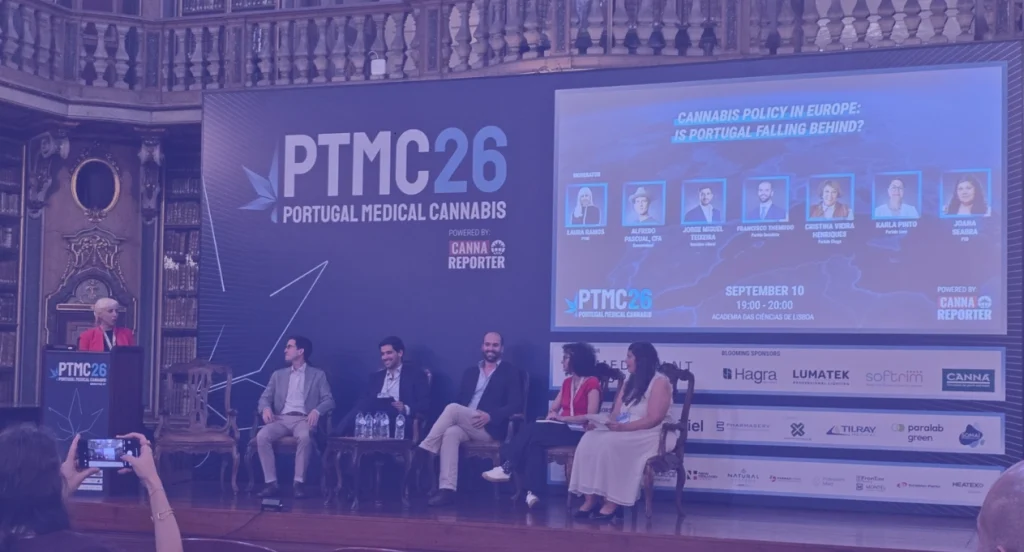
Erkenntnisse aus einem parteiübergreifenden Podium bei PTMC (Portugal Medizinisches Cannabis) am 11. September 2026.
Podiumsdiskutanten: Jorge Miguel Teixeira, MdB (Iniciativa Liberal, IL), Francisco Themudo MP
(Sozialistische Partei, PS), Joana Seabra MP (Sozialdemokratische Partei,
PSD), Karla Pinto (Partei LIVRE) und Alfredo Pascual, CFA (Cannamedical).
Moderiert von Laura Ramos, CannaReporter. Cristina Vieira Henriques MP
(Genug) stand im Programm, war aber nicht anwesend.
Kurzfassung
- Jede Partei auf der Bühne unterstützt medizinisches Cannabis. Niemand auf der Bühne war bereit, im aktuellen Parlament die Legalisierung für den Freizeitkonsum voranzutreiben, da sie das Risiko einer rechten Gegenreaktion höher einschätzen als den Nutzen.
- Die einzige, billigste und schnellste Lösung, auf die sich alle geeinigt haben: INFARMED Aktualisierung der festgeschriebenen Liste von Indikationen, für die Cannabis verschrieben werden kann. Sie wurde seit 2019 nicht mehr angefasst und erfordert keine Gesetzesänderung.
- Portugal ist der weltweit zweitgrößte Exporteur von medizinischem Cannabis, dennoch wurden im ersten Halbjahr 2026 nur etwa 5.000 inländische Rezepte ausgestellt – mit anderen Worten: portugiesische Patienten werden weiterhin auf den illegalen Markt verwiesen.
- Alfredo Pascual führte die Anwesenden durch das, was die deutsche Reform vom April 2024 tatsächlich gebracht hat und wo sie ins Stocken geraten ist, als das naheliegendste Live-Fallbeispiel für Portugal.
- IL's Jorge Teixeira hat formelle parlamentarische Anfragen eingereicht. an die Ministerien für Justiz, Wirtschaft und Gesundheit zu Hanf, CBD (Cannabidiol) und der ärztlichen Zulassung. Die Antworten sind innerhalb von 60 Tagen fällig.
Die Weichen stellen: 25 Jahre Entkriminalisierung, kein inländisches Angebot

Portugal hat 2001 den Eigenkonsum aller Drogen entkriminalisiert[1], einer Politik, die international immer noch als Erfolg im Bereich der öffentlichen Gesundheit gelobt wird. Laura Ramos von CannaReporter öffnete das Gremium, indem es die Linie zog, über die die Industrie immer wieder stolpert: Die Entkriminalisierung deckt den Eigenkonsum ab, aber das Anbauen, Kaufen, Verkaufen oder Weitergeben von Cannabis bleibt eine Straftat, und es gibt keinen legalen inländischen Versorgungsweg für Erwachsene. In der Praxis bedeutet das, dass der illegale Markt nach wie vor der Ort ist, von dem Konsumenten und im Umkehrschluss die meisten Patienten tatsächlich ihre Produkte beziehen.
Das Gremium wandte sich daraufhin der Frage im Titel der Session zu: Fällt Portugal, einst ein globaler Maßstab für eine progressive Drogenpolitik, nun zurück?
Eine Stimme jedoch fehlte. Die Abgeordnete Cristina Vieira Henriques von Genug, Portugals rechtsextreme Partei sollte teilnehmen, schaffte es jedoch nicht in das Panel. Historisch gesehen war Chega gegen jede Form der Legalisierung von Cannabis. Der Parteivorsitzende von Chega, André Ventura, erklärte 2024 öffentlich, er wolle “ganz Portugal von Cannabis säubern”.”[5]. Jedoch signalisierte das Auftreten von Chega beim PTMC im vergangenen Jahr (2025) einen sehr willkommenen Wandel in ihrer Haltung, wobei ihre Vertreterin Cláudia Estêvão klarstellte: “Chega ist für Medizinalcannabis, aber gegen Cannabiskonsum zu Genusszwecken.“.[7]”Zwar sorgte die Abwesenheit von Chega beim diesjährigen PTMC für weniger Spannung, die sonst eine hitzigere Debatte ausgelöst hätte. Dennoch war es interessant, den Schlagabtausch zwischen dem Abgeordneten Jorge Teixeira (IL) und dem Abgeordneten Francisco Themudo (PS) zu beobachten.
💡 SCHON GEWUSST?
Portugal war das erste Land der Welt, das entkriminalisieren der Eigenkonsum aller kontrollierten Substanzen. Diese im Jahr 2001 verabschiedete Politik ist heute 25 Jahre alt und gilt nach wie vor unter linken wie rechten Regierungen gleichermaßen.[1]
Wann die vier Parteien stehen
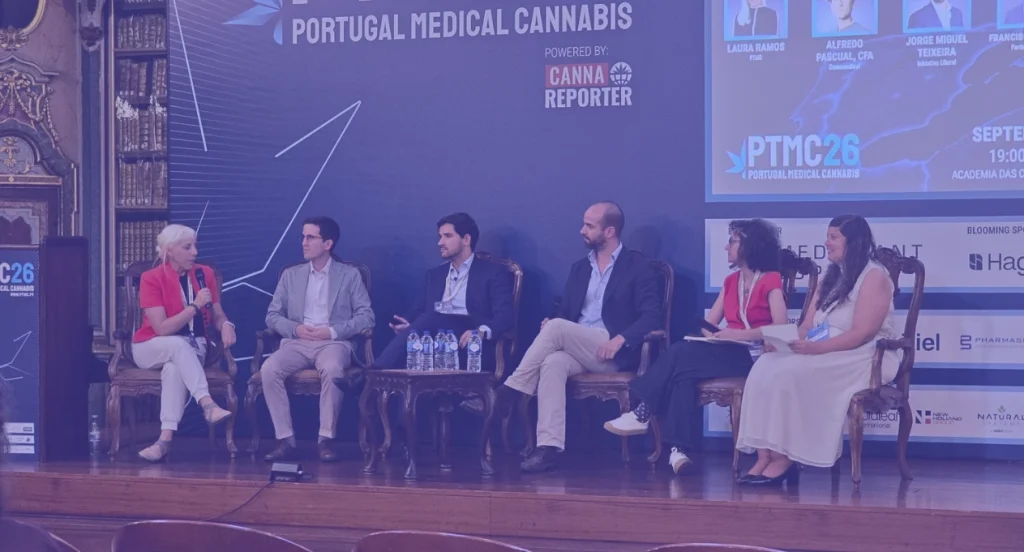
Iniciativa Liberal: Unauffällig bleiben, Cannabis langweilig machen
Jorge Teixeira MdB (IL), der zum zweiten Jahr in Folge auf der PTMC-Bühne stand, argumentierte, dass die politische Großwetterlage jeden radikalen Vorstoß derzeit kontraproduktiv mache. Seiner Darstellung nach würde eine starke Sichtbarkeit der Cannabisreform der rechtspopulistischen Partei Vorschub leisten Genug es zu instrumentalisieren, und die Industrie würde schlechter dastehen als zuvor.
Seine bevorzugte Haltung besteht darin, die Akte technisch zu halten, medizinisches Cannabis als ein langweiliges Verwaltungsprodukt zu behandeln und es sauber zu trennen von CBD, von Hanf, und aus jeder Debatte über die Legalisierung für den Freizeitkonsum. Inzwischen hat er die Theorie in die Praxis umgesetzt und schriftliche Fragen an drei Ministerien zu Fristen für die Lizenzvergabe, Nichtverlängerungen und dem CBD-Regime eingereicht, wobei die Antworten innerhalb der gesetzlichen Frist von 60 Tagen erwartet werden.
Sozialistische Partei: Bilden Sie die Koalition, warten Sie nicht auf eine
Francisco Themudo MdB (PS) Es besteht Einigkeit darüber, dass dieses Parlament keine Reform für den Freizeitkonsum liefern wird. Seine Einschätzung ist eher struktureller Natur: Angesichts einer Mitte-Rechts-Minderheitsregierung, die von einer rechtsextremen Partei unterstützt wird, kann nur eine progressive Koalition das Dossier voranbringen, und diese Koalition existiert derzeit nicht.
Themudo schob einen Teil der Verantwortung der Industrie selbst zu und argumentierte, dass die in Portugal lizenzierten Betreiber auf dem Heimatmarkt zu leise und zu sehr auf das deutsche Exportgeschäft konzentriert gewesen seien, um zu Hause politischen Rückhalt aufzubauen.
BUCH: Patienten an erster Stelle, Ärzte ausgebildet, Portugal als Forschungszentrum
Karla Pinto BUCH, eine Tierärztin, Cannabis-Verschreiberin und Forscherin, brachte die klinische Stimme ein. Sie wies darauf hin, dass Portugal bereits EU-GMP (Gute Herstellungspraxis der Europäischen Union) lizensierte Produzenten, dass es Blüten international exportiert und dass die Patienten nach wie vor die Gruppe sind, die auf der Strecke bleibt.
Ihre Maßstäbe waren Deutschland und Tschechien, wo bis zu 90% der verordneten Cannabisarzneimittel vom öffentlichen Gesundheitssystem übernommen werden, sowie Dänemark, das die Verschreibung nicht auf eine geschlossene Liste von Indikationen beschränkt. Sie argumentierte auch aus Sicht der Forschung: Portugals geringe Größe ist ein Vorteil für klinische Studien, und das Endocannabinoid-System gehört in das medizinische Bachelorstudium, nicht in einen Wochenendkurs.
PSD: Bessere Regulierung, nicht weniger Regulierung, beginnend mit der Arztausbildung
Joana Seabra, MdB (PSD), ein praktischer Hausarzt, wurde gemessen. Portugal war eines der ersten Länder in Europa, das einen rechtlichen Rahmen für Medizinalcannabis schuf, weshalb das Land ihrer Ansicht nach bei der Struktur nicht hinterherhinkt. Es hinkt bei der Umsetzung hinterher.
Ihr größter einzelner Hebel ist Medizinausbildungwenn Ärzte nicht im Verschreiben geschult sind, bewirkt eine Änderung des übrigen Rahmens wenig. Sie lud zu parteiübergreifender Zusammenarbeit mit IL zu einem gemeinsamen Vorstoß ein und signalisierte Offenheit für eine Überprüfung des Rahmens auf der Grundlage von Beweisen.
💡 SCHON GEWUSST?
Nur 5.413 medizinische Cannabis-Rezepte wurden im ersten Halbjahr 2026 in Portugal für eine Bevölkerung von rund 11 Millionen Menschen verfasst.[2] Alfredo Pascual wies auf der Bühne darauf hin, dass selbst diese Zahl Rezepte und nicht einzelne Patienten zählt.
Die Branchenrealität: Alfredo Pascual darüber, was Portugal fehlt
Alfredo Pascual, CFA, Leiter(in) für Strategie & Unternehmensentwicklung bei Cannamedical, war der ausgewiesene Pragmatiker des Gremiums. Er zog eine klare Trennlinie zwischen den beiden Märkten. Auf für den Freizeitgebrauch Er räumte ein, dass die politischen Bedingungen für eine kommerzielle Regulierung noch nicht reif sind, wies jedoch darauf hin, dass nicht-kommerzielle Wege wie der Eigenanbau und Cannabis Social Clubs (CSCs), sind bereits in anderen europäischen Ländern in Betrieb und können diskutiert werden, ohne einen Kulturkampf auszulösen. Auf der medizinisch Seinerseits machte er den schärfsten, umsetzbarsten Vorschlag des Abends und erhielt hörbare Zustimmung von jeder Partei auf der Bühne.
Die INFARMED Die Liste der Erkrankungen, für die Cannabis legal verschrieben werden kann, wurde seit 2019 nicht mehr aktualisiert. Sie enthält etwa acht Indikationen und sieht vor, dass Cannabis eine Therapiemaßnahme letzter Wahl sein muss, nachdem herkömmliche Behandlungen versagt haben. Diese Liste kann geändert werden, ohne das Gesetz zu ändern. Es handelt sich um einen Verwaltungsakt durch INFARMED (Nationale Behörde für Arzneimittel und Gesundheitsprodukte), Portugals Arzneimittelbehörde. Pascualbitten war direkt: Bringen Sie Abgeordnete dazu, INFARMED offiziell aufzufordern, es zu überprüfen, zu erweitern und die Ausnahmeklausel zu streichen. Die Ausbildung von Ärzten zahlt sich nur aus, wenn Ärzte tatsächlich verschreiben dürfen.
Themudo fügte die zweite Hälfte desselben Arguments hinzu. Wenn der Binnenmarkt nie über ein paar tausend Rezepte hinauswächst, gibt es keine soziale Koalition, die den Sektor verteidigt oder ausbaut. Betreiber, die nach Deutschland exportieren, ohne in Portugal Lobbyarbeit zu betreiben, sind seiner Ansicht nach Teil des Problems.
Was die deutsche Reform vom April 2024 tatsächlich bewirkte
Da der deutsche Vergleich wiederholt aufkam, ging Pascual im Raum den Stand der Dinge anderthalb Jahre nach der Reform durch. Die CanG (Cannabisgesetz) Gesetz, das am 1. April 2024 in Kraft trat, bewirkte drei Dinge[3]. Zunächst schuf es legale Wege für den Konsum durch Erwachsene durch den Eigenanbau und Cannabis Social Clubs, obwohl Vereine zu Beginn so streng reguliert wurden, dass nur wenige an ihrer Kapazitätsgrenze arbeiten. Zweitens wurde Cannabis von der deutschen Liste der Betäubungsmittel, was den Markt tatsächlich bewegte. Rezepte waren leicht zu bekommen, größtenteils über Telemedizin, und der medizinische Kanal explodierte. Drittens, die versprochene kommerzielle Säule für den Erwachsenenkonsum, bekannt als Säule 2, wurde nie verwirklicht und ist inzwischen praktisch auf Eis gelegt.
Pascuals Zahlen: rund 5 Millionen Cannabiskonsumenten jährlich in Deutschland, wobei schätzungsweise 1 bis 2 Millionen inzwischen legal über den medizinischen Weg darauf zugreifen – ein Anteil, der Monat für Monat weiter wächst. Versuche, die Telemedizin einzuschränken und die persönliche Abholung in der Apotheke vorschreiben zu wollen, sind im Parlament ins Stocken geraten, teilweise weil eine europäische Richtlinie es deutschen Patienten ermöglicht, Rezepte aus anderen Mitgliedstaaten zu erhalten, wodurch eine rein deutsche Beschränkung leicht zu umgehen wäre. Die von der Regierung in Auftrag gegebene EKOCAN Verbrauchstudie, geleitet vom Universitätsklinikum Hamburg-Eppendorf im Auftrag des Bundesministeriums für Gesundheit, hat ihre Ergebnisse des ersten Jahres Ende 2025 veröffentlicht[4]. Die Prävalenz des Konsumverhaltens bei Jugendlichen und Erwachsenen hatte sich nicht signifikant verändert, und ein begleitendes Abwasserüberwachungsprogramm (AMoCan) in 15 deutschen Städten konnte ebenfalls kein kurzfristiger Konsumgipfel festgestellt werden.
5 wichtige Erkenntnisse für Betreiber
- Die Konsenslösung ist administrativer, nicht legislativer Natur. Die Überarbeitung der Liste verschreibungsfähiger Indikationen von INFARMED und die Streichung der Ausnahmeklausel ist der einzige Punkt, den jede anwesende Partei unterstützte. Sie erfordert keine Abstimmung im Parlament. Wenn die Branche für die nächsten 12 Monate eine einzige einheitliche Forderung haben möchte, dann ist es diese.
- Die Legalisierung für den Freizeitkonsum steht in diesem Parlament nicht zur Debatte. Sowohl IL als auch PS waren deutlich. Die Einbringung eines Legalisierungsgesetzes jetzt würde Chega ein Mobilisierungsthema liefern und lizenzierten Betreibern, auch im medizinischen Bereich, das Leben schwerer machen. Die Reihenfolge ist von Bedeutung.
- Die Ausbildung von Ärzten ist ein Hebel zur Marktentwicklung und kein nettes Extra. Joana Seabras Argument war pragmatisch: Ärztinnen und Ärzte, die das Endocannabinoid-System nicht verstehen, werden unabhängig von den Regeln nicht verschreiben. Jede portugiesische Medizinalcannabis-Strategie, die die ärztliche Fortbildung auslässt, baut auf Sand.
- Portugiesische Betreiber müssen in Portugal lobbying betreiben, nicht nur Deutschland beliefern. Als zweitgrößter Exporteur der Welt ohne funktionierenden Binnenmarkt dazustehen, ist politisch instabil. Themudos Warnung an die Branche war unmissverständlich: keine heimische Koalition, kein langfristiger Schutz.
- Sehen Sie sich die parlamentarischen Antworten von Jorge Teixeira an. Die Antworten der Ministerien für Justiz, Wirtschaft und Gesundheit werden innerhalb von 60 Tagen erwartet und werden offenlegen, ob die derzeitigen Reibungspunkte bei Lizenzen, Verlängerungen und CBD durch politische Absicht oder durch administrative Trägheit verursacht werden. Diese Antwort ändert in jedem Fall die Lobbying-Strategie der Branche.
💡 SCHON GEWUSST?
Portugal ist jetzt das zweitgrößter Exporteur von medizinischem Cannabis weltweit, direkt hinter Kanada. Im Jahr 2025 wurden fast 80 Tonnen verschifft, etwa 156% mehr als im Vorjahr, wobei Deutschland rund 46% dieser Menge auf sich vereinte.[6] Das unter ... produzierte Volumen EU-GMP in Portugal übersteigt jedes Jahr bei Weitem das, was portugiesische Patienten selbst legal erhalten können.
Bemerkenswerte Zitate aus dem Panel
Francisco Themudo, MdP (PS):
"Obwohl Cannabis entkriminalisiert ist, ist es nicht legal. Die Portugiesen kaufen jede Art von Droge nur auf dem illegalen Markt. Keine Qualität, keine Forschung, keine Rücksicht auf das Alter. Ein Kind kann die Oberschule verlassen und draußen vor den Toren kaufen. Wir müssen uns zu einer mehr auf Beweisen basierenden Politik weiterentwickeln."
"Mit dieser Art von Law-and-Order-Koalition ist es nicht möglich, weiter voranzukommen. Die Entkriminalisierung von 2001 fand unter einer Mitte-Links-Koalition statt. Die Legalisierung von medizinischem Cannabis erfolgte unter einer Mitte-Links-Koalition. Um uns weiterzuentwickeln, brauchen wir eine Koalition der Progressiven."
"Portugal kann ein landwirtschaftliches Zentrum sein, aber es sollte auch ein Wissenszentrum sein. Wir können nicht nur das Agrarland für den Export von Cannabis sein. Wir müssen in der Forschung, bei neuen Produkten und in dem Ökosystem, das Wissenschaft, Industrie und Gesellschaft verbindet, einen Mehrwert schaffen."
Jorge Miguel Teixeira MP, IL:
"Wenn ich heute in diesem Parlament einen Gesetzentwurf zur vollständigen Regulierung einbringen würde, wäre die Reaktion absolut giftig. Es würde das Leben für jeden, der in diesem Sektor arbeitet, schwieriger machen, und zwar sehr viel schwieriger. Das ist ein sehr guter Grund, es im Moment nicht zu tun."
"Eines der größten Probleme für Cannabis ist derzeit, dass es zu besonders ist. Man muss Cannabis langweilig machen. Medizinisches Cannabis sollte eine langweilige Angelegenheit sein, die man mit einem Verwaltungsakt lösen kann."
"Mein Eindruck ist, dass das Meiste, was bei Lizenzierungen und Nichtverlängerungen passiert, eher auf Unwissenheit als auf Absicht beruht. Solange ich keine gegenteiligen Bestätigungen erhalte, ist das unsere Arbeitshypothese, und das ändert die Art von Druck, die die Branche ausüben sollte."
Karla Pinto, FREI:
"Portugal war vor einigen Jahren ein Pionier. Wir können wieder Pioniere sein. Wir haben die Pflanze, wir haben die Industrie, wir haben EU-GMP-Einrichtungen, und jetzt exportieren wir Blüten. Was uns fehlt, ist, den Patienten zuzuhören."
"Dänemark hat keine Liste. Jeder Arzt jeder Fachrichtung darf Cannabis verschreiben. Die Ärzte brauchen keine gesetzliche Liste, um dies oder das zu behandeln. Es ist ihr klinisches Urteil, und es funktioniert."
"Es ist kein Wochenendkurs. Wir müssen das Endocannabinoid-System in das Universitätsstudium und in die Weiterbildung für bereits approbierte Ärzte integrieren. Jeder Patient reagiert anders. Wir haben mehr als 100 Moleküle, nicht nur THC und CBD."
Joana Seabra MdP, PSD:
"Ich würde nicht sagen, dass Portugal ins Hintertreffen gerät. Wir waren eines der ersten Länder, die einen rechtlichen Rahmen für Medizinalcannabis geschaffen haben. Aber wir können und müssen es besser machen: einen besseren Zugang für Patienten, eine bessere medizinische Ausbildung und mehr medizinische Leitlinien."
"Ich bin sowohl Hausarzt als auch Abgeordneter und habe nicht viel medizinische Ausbildung über die Verwendung von Cannabis. Das ist der erste Schritt. Wenn Ärzte geschult sind und verschreiben wollen, ändert sich alles andere."
"Wir brauchen eine gute Regulierung, nicht weniger Regulierung. Wenn wir gute Beweise und gute Sicherheitsdaten für Patienten haben, können wir parteiübergreifend zusammenarbeiten und etwas zum Besseren verändern. Ich denke, das ist möglich."
Alfredo Pascual, CFA, Cannamedical:
"Es gibt in Portugal (Stand erstes Halbjahr 2026) nur etwa 5.000 Verschreibungen von Cannabis in einem Land mit 11 Millionen Einwohnern. Und das sind Verschreibungen, keine Patienten, also ist die tatsächliche Patientenzahl niedriger. Das ist kein medizinischer Markt. Das ist ein Rundungsfehler."
"Die Liste der Indikationen, für die Cannabis in Portugal verschrieben werden kann, wurde seit 2019 nicht aktualisiert. INFARMED kann das morgen ändern. Man muss das Gesetz nicht ändern. Man muss nur, dass sich die Regulierungsbehörde zusammensetzt, die Liste überprüft, sie erweitert und die Ausnahmeregelungsklausel streicht."
"Die größte einzelne Veränderung in Deutschland im April 2024 waren nicht die Clubs. Es war die Streichung von Cannabis aus dem Betäubungsmittelgesetz. Das hat Verschreibungen einfach gemacht und das ist es, was den Markt explodieren ließ."
Häufig gestellte Fragen
Fällt Portugal bei Cannabis tatsächlich zurück?
Die Antwort des Gremiums war nuanciert. Portugal liegt beim rechtlichen Rahmen nicht zurück. Es war eines der ersten Länder in Europa, das medizinisches Cannabis legalisierte. Es hinkt bei der Umsetzung hinterher: Im ersten Halbjahr 2026 wurden nur ca. 5.000 Rezepte ausgestellt, eine Indikationsliste, die seit 2019 eingefroren ist, ungleichmäßige Arztschulungen und kein legaler Weg für den Konsum durch Erwachsene über die Entkriminalisierung von 2001 hinaus. Deutschland hat sich, um die Worte von Alfredo Pascual zu verwenden, in 18 Monaten weiter vorweg bewegt als Portugal in fünf Jahren.
Wer kann in Portugal Cannabis verschreiben, und wofür?
Jeder approbierte Arzt kann prinzipiell medizinisches Cannabis verschreiben, allerdings nur für eine geschlossene Liste von etwa acht Indikationen, die definiert werden durch INFARMED im Jahr 2019 und nur als allerletztes Mittel, nachdem konventionelle Behandlungen versagt hatten. Die Teilnehmer aus vier Parteien sprachen sich dafür aus, diese Liste zu erweitern und die Beschränkung auf das letzte Mittel als die schnellste, nicht-legislative Reform zu beseitigen.
Wird Portugal in diesem Parlament Cannabis für den Freizeitgebrauch legalisieren?
So gut wie sicher nicht. Sowohl Jorge Teixeira (IL) als auch Francisco Themudo (PS) sagten öffentlich auf der Bühne, dass eine Stärkung der Reform für den legalen Konsum von Erwachsenen zum jetzigen Zeitpunkt geben würde Genug ein Mobilisierungsproblem und die Gefahr, Teile des bestehenden Rahmens rückgängig zu machen. Ihre Strategie besteht darin, Medizin-, Hanf- und CBD-Produkte leise voranzutreiben, während die Freizeitnutzung auf ein freundlicheres Parlament wartet.
Was kann Portugal aus der deutschen Reform vom April 2024 lernen?
Zwei Lehren dominierten das Podium. Erstens hat die Streichung von Cannabis von der Betäubungsmittel-Liste die Verschreibungsmöglichkeiten weit mehr gefördert als jede regulatorische Kampagne. Zweitens kann eine übermäßige Regulierung von Wegen für den Freizeitkonsum (Deutschlands Cannabis-Clubs) dazu führen, dass diese praktisch unbrauchbar werden, wodurch das eigentliche Argument für die Reform untergraben wird. Pascuals Fazit: Welchen Weg Portugal am Ende auch einschlägt, administrative Einfachheit ist ebenso wichtig wie die rechtliche Schlagzeile.
Wo passt Lumino in das Ganze hinein?
Wir helfen europäischen Cannabisunternehmen dabei, die operativen Mitarbeiter, Qualitätsverantwortlichen, Regulatorik-Experten und Vertriebsteams zu finden, die regulierte Märkte tatsächlich zum Laufen bringen. Jedes Gespräch auf diesem Podium – von der Ärzteschulung über die Rückverfolgbarkeit bis hin zum Lobbyismus – ist irgendwo auch ein Personalgespräch. Genau in diesem Bereich der Branche sind wir zu Hause, und die PTMC ist einer der Orte, an denen wir miterleben, wie er sich in Echtzeit weiterentwickelt.
Referenzen
- Transform Drug Policy Foundation. “Entkriminalisierung von Drogen in Portugal: Die Wahrheit ans Licht bringen.” transformdrugs.org.
- Podiumsdiskussions-Offenlegung von Alfredo Pascual (Cannamedical) auf dem PTMC 2026, Lissabon, 11. September 2026. Zahl bestätigt durch CannaReporter Berichterstattung über den portugiesischen Markt für medizinisches Cannabis.
- Bundesministerium für Gesundheit. “Cannabisgesetz (CanG).” Bundesministerium für Gesundheit, Deutschland, in Kraft getreten am 1. April 2024. bundesgesundheitsministerium.de.
- EKOCAN-Projekt (Evaluierung des Konsumcannabisgesetzes), Universitätsklinikum Hamburg-Eppendorf im Auftrag des Bundesministeriums für Gesundheit, im Spätjahr 2025 veröffentlichte Ergebnisse des ersten Jahres. Siehe DRKS00037301 und Zusammenfassungsberichte bei Das Geschäft mit Cannabis und Cannabis-Gesundheitsnachrichten.
- Cannareporter. “André Ventura sagt, er wolle ‘ganz Portugal von Cannabis säubern’.” 1. April 2024. cannareporter.eu. Chegas parlamentarische Position bestätigt in Cannabis in Portugal.
- CannaReporter. “Portugal ist mit über 20 Tonnen im Jahr 2024 der zweitgrößte Exporteur von medizinischem Cannabis weltweit.” cannareporter.eu. 2025 Exportergebnisse über The Portugal News und Prohibition-Partner.
- CannaReporter. “Die angeregte Diskussion mit den politischen Parteien über die Entkriminalisierung von Cannabis war der einmalige Moment des PTMC25. Rückblick auf die politische Debatte des letzten Jahres über medizinisches Cannabis. cannareporter.eu.


 English (UK)
 Deutsch