
Once a cannabis plant has been grown, dried and cured, it becomes a product. In European medical settings that usually means one of five formats: dried flower, oils and tinctures, capsules and tablets, oromucosal sprays, and (occasionally) topicals. How each format is consumed matters as much as what is in it, because onset time, duration and bioavailability vary dramatically between inhalation, oral, sublingual and topical routes. Understanding those variables is the difference between a prescription that works and one that misses.
In the first five articles of this series we followed cannabis from its history through its chemistry, anatomy, taxonomy and cultivation lifecycle. In each of those articles the plant was still a plant. This is the article where it becomes a medicine.
That transition is not trivial. The same cultivar, containing the same cannabinoids and terpenes, can behave very differently in a patient’s body depending on whether it is inhaled through a vaporiser, taken as an oil under the tongue, swallowed as a capsule or rubbed onto a joint as a cream. Prescribers, pharmacists and patients across Germany, the UK, Portugal, the Netherlands and the rest of medical Europe make daily decisions based on those differences, and the vocabulary is worth learning if you are stepping into any part of the sector.
This is the sixth article in our Cannabis 101 series. In the previous article we walked through the cultivation lifecycle from seed to cured flower; here we pick that cured flower up off the shelf and follow it into the different formats and consumption methods that actually reach the patient.
The five main product formats in European medical cannabis
Walk into a European medical cannabis pharmacy today and, despite the number of brands on the shelf, almost everything you see falls into one of five product categories.
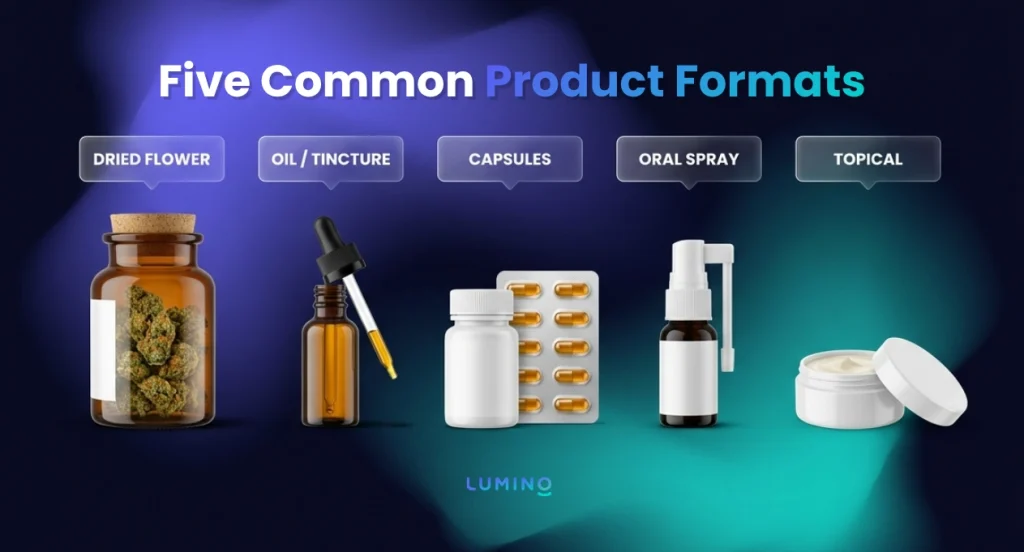
🟣 Dried flower. The most familiar format: whole cured buds sold in labelled amber pharmacy jars. Dried flower is the single most-prescribed format in Germany, where physicians can prescribe up to 100,000 mg (100 g) per patient per 30-day cycle, and it is also common in the UK for patients using a vaporiser. Every jar carries a chemovar profile: THC and CBD percentages, dominant terpenes and often the cultivar name.
🟣 Full-extract oils and tinctures. Cannabis flower extracted into a carrier oil (typically MCT or olive) and dispensed with a dropper. Oils are the most widely-prescribed non-flower format in the UK. They come in defined concentrations (for example, 10 mg THC per ml, or specific THC:CBD ratios), which allows very precise dosing.
🟣 Capsules and tablets. Pre-measured single-dose oral formats containing cannabis extract in a shell or compressed pill. Familiar and comfortable for many patients who are used to conventional pharmacy medicines, and easy to titrate because each unit is a fixed dose.
🟣 Oromucosal sprays. A metered-dose spray held under the tongue or against the cheek. The best-known European example is Sativex (nabiximols), a 1:1 THC:CBD spray licensed for multiple sclerosis spasticity, and Bedromed, a standardised sublingual spray from Dutch producer Bedrocan. Sprays combine the precise dosing of an oil with a faster route into the bloodstream via the oral mucosa.
🟣 Topicals. Creams, balms and salves applied directly to the skin, typically for localised pain, inflammation or skin conditions. Topicals are the smallest category in European medical cannabis today, but a growing one, particularly for arthritis and dermatology use cases.
Two other formats appear in adult-use markets outside Europe but remain rare or unavailable in most European medical channels: edibles (gummies, chocolates, baked goods) and concentrates (resins, rosins, shatter). Both raise dosing consistency and regulatory questions that most European regulators are still working through.
🌱 Fun fact:
The dried-flower format that dominates German prescriptions today is technically an unusual choice for a modern pharmacy. Almost no other medicine is dispensed as a whole raw agricultural product for the patient to prepare themselves. Cannabis is one of the very few exceptions, and one of the reasons pharmacy staff in Germany often need extra training just to handle it correctly.
The four consumption routes
Once you know the format, the next question is how the cannabis actually enters the body. Every product on the shelf uses one of four routes, and each has its own onset time, duration and bioavailability (the fraction of the active dose that actually reaches the bloodstream).
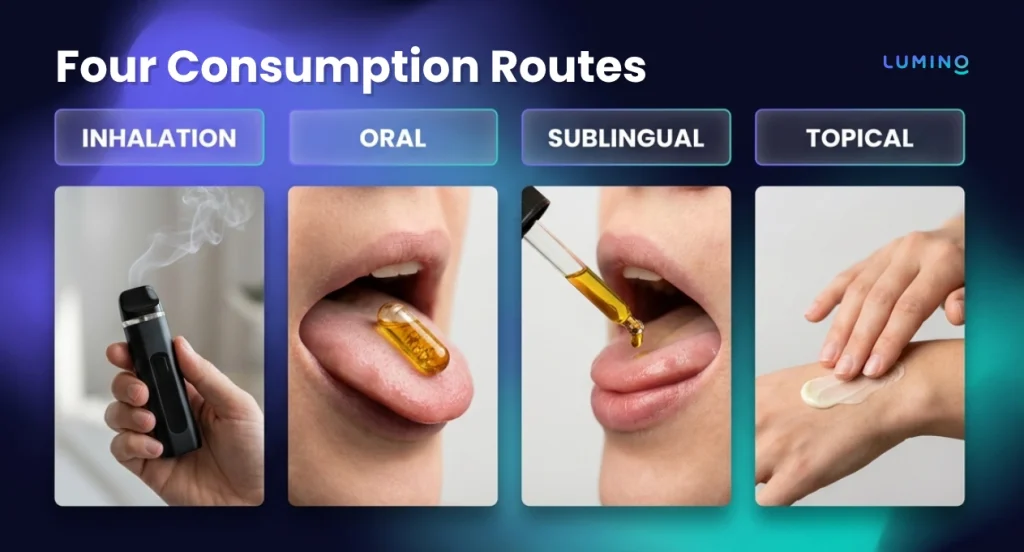
🟣 Inhalation (vaporisation). The patient heats dried flower in a vaporiser at around 180–210°C, which releases cannabinoids and terpenes as a vapour without combustion. THC reaches the brain within seconds to a few minutes, with peak effects at around 10 minutes and a total duration of 2–4 hours. Bioavailability is high, typically 25–35%. Vaporisation is the preferred inhalation route across European medical settings because it captures up to 95% of the cannabinoids without the tar and combustion by-products of smoking. Importantly, it is illegal to smoke medical cannabis in the UK even if the flower has been legally prescribed: patients must use a vaporiser.
🟣 Oral (swallowed). Capsules, tablets and any oil or edible that is swallowed and digested. Onset is slow and highly variable, between 30 minutes and 2 hours, because cannabinoids have to pass through the digestive tract and be metabolised by the liver (the “first-pass effect”) before entering the bloodstream. Duration is long, typically 4–8 hours. Bioavailability is low and inconsistent, in the 6–20% range, and it depends heavily on whether the patient is fed or fasted and on their individual liver enzymes.
🟣 Sublingual (under the tongue). Oils placed under the tongue or sprays applied against the oral mucosa. The cannabinoids absorb directly into the bloodstream through the thin tissue of the mouth, partially bypassing first-pass liver metabolism. Onset is faster than swallowed oral, around 15–45 minutes, with a duration of 2–4 hours. Bioavailability sits between inhalation and oral. This is the route Sativex and Bedromed sprays use, and it is why an oil “held under the tongue for 60–90 seconds” behaves very differently from the same oil simply swallowed.
🟣 Topical (applied to skin). Creams, balms and salves rubbed onto the skin over a specific area of pain or inflammation. Cannabinoids interact with local cannabinoid receptors in skin tissue without meaningfully entering systemic circulation. Onset varies from a few minutes to a couple of hours, and effects are localised rather than whole-body, with a duration that can last up to 12 hours. Almost no THC reaches the brain, so topicals do not produce a “high”.
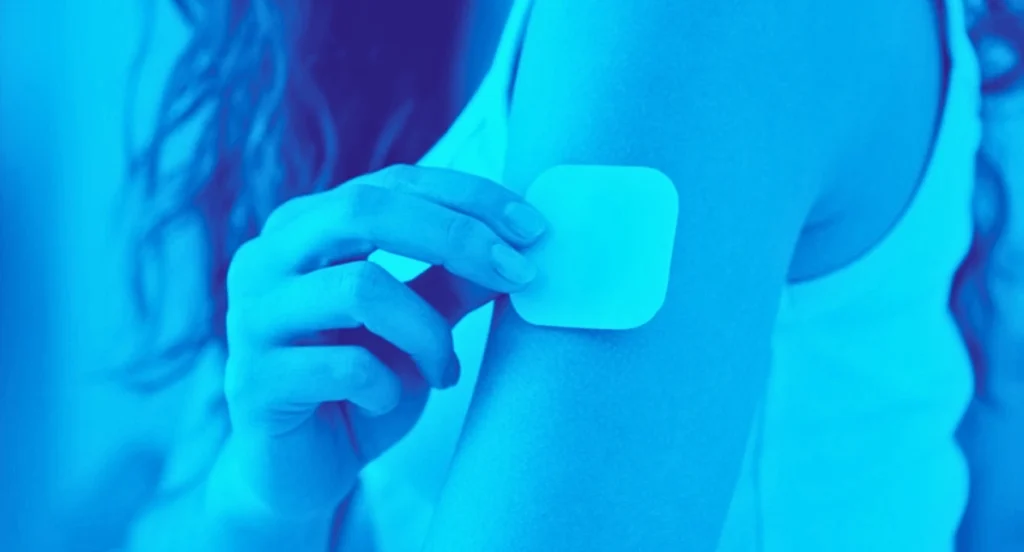
A fifth route is worth mentioning briefly because it is starting to appear in newer European products: transdermal patches, which sit on the skin and slowly deliver cannabinoids into the systemic bloodstream over hours. Transdermal is technically different from topical: a topical works locally, a transdermal patch works whole-body. It remains an emerging category.
🌱 Fun fact:
Nanoemulsion formulations, where cannabinoid oil droplets are broken down into extremely small particles suspended in water, achieve roughly three to four times greater bioavailability than conventional oral cannabis oils, and can bring oral onset time down from an hour or more to around 10–30 minutes. A handful of European producers are already using this technology in newer oral products, and it may quietly reshape the “oral vs sublingual” trade-off over the next few years.
Choosing a format: what actually goes into the decision
Given a menu of dried flower, oils, capsules, sprays and topicals, and four different routes into the body, how does a prescriber and a patient actually land on one? In European medical practice the choice is rarely about preference. It usually comes down to five practical factors:
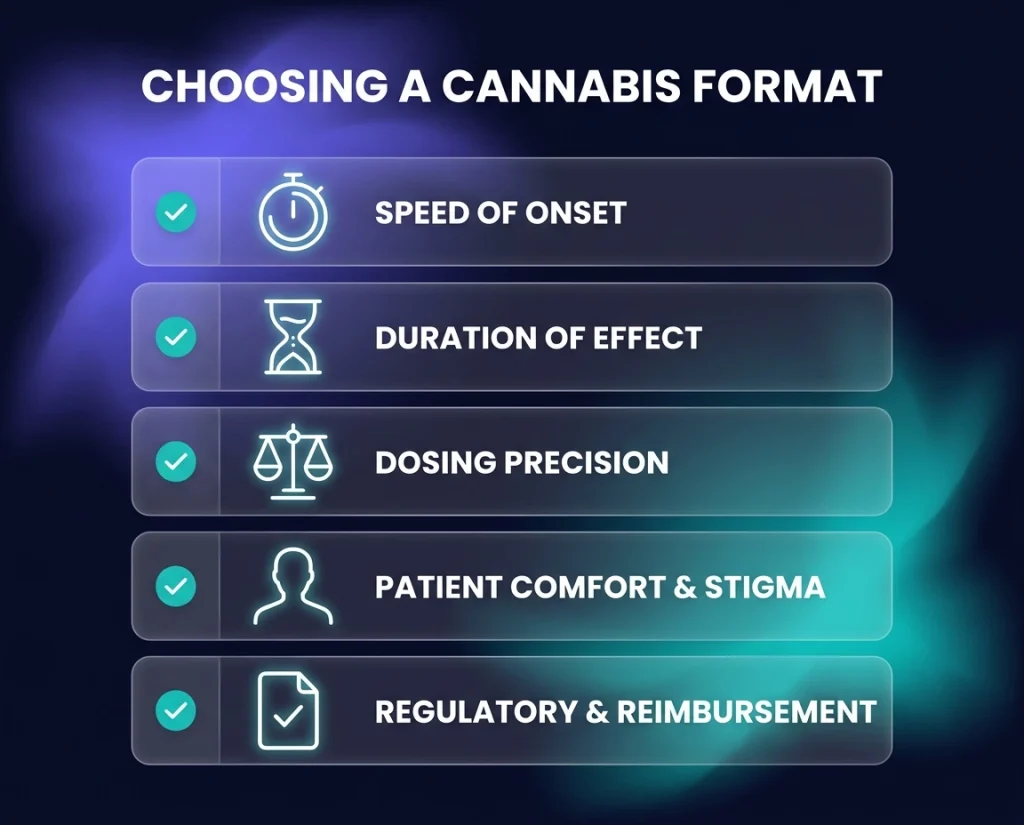
🟣 Speed of onset. A patient with breakthrough pain, acute anxiety, or a sudden nausea episode needs relief in minutes, not hours. That points strongly toward inhaled flower via a vaporiser, or a sublingual spray. A patient managing chronic long-duration symptoms (sleep, background pain, appetite maintenance) is usually better served by oral formats where the effects come on slowly but last much longer.
🟣 Duration of effect. Inhaled cannabis lasts 2–4 hours. Sublingual sits at 2–4 hours. Oral runs 4–8 hours. Topical is the longest, up to 12 hours but localised. Prescribers match the format to the rhythm the patient actually needs.
🟣 Dosing precision. Oils, capsules and sprays are dosed in exact milligrams, which is preferable for patients who need tight titration or who are naive to cannabis. Dried flower is harder to dose precisely because each inhalation delivers a variable amount, so it is usually prescribed to more experienced patients or to those who are already stabilised.
🟣 Patient comfort and stigma. A capsule looks and feels like any other medicine. A vaporiser looks less like one, and for some patients (older, professional settings, workplaces) that matters. In parts of Europe where medical cannabis is still socially unfamiliar, the format itself carries weight.
🟣 Regulatory and reimbursement context. Some formats are covered by German statutory health insurance more readily than others. Some are legal to prescribe in one European country but not another. Sativex, for example, is licensed for a very specific indication (multiple sclerosis spasticity), whereas dried flower is prescribed off-label under broader unlicensed-medicine frameworks. Which formats are on the table in a given consultation depends heavily on where the consultation is happening.
The upshot is that “medical cannabis” is not one product; it is a small family of products with meaningfully different behaviours, and a good prescriber is really matching a cannabinoid ratio and terpene profile (from Article 3) delivered via a specific route to a specific patient’s symptoms, rhythm and preferences. Every format on the shelf earns its place for a different combination of those variables.
🌱 Fun fact:
In Germany, the country with the largest and most mature European medical cannabis market, dried flower still accounts for the largest single share of prescriptions, while in the UK the balance has skewed the other way, with oils and sublingual tinctures dominating new prescriptions. Same medicine, same continent, quite different national habits.
Why products and consumption methods matter to jobs in the European cannabis industry
The format layer of medical cannabis is one of the busiest surfaces of the industry, because it is the point where the plant meets the patient. Each role we have followed across the series interacts with it slightly differently:
🟣 Product developers and formulators live inside these categories. Their job is to design the next generation of oils, capsules, sprays, topicals and (increasingly) nanoemulsion or transdermal products, and to hit the cannabinoid ratios, onset profiles and dosing precision that clinicians are asking for.
🟣 Extraction technicians and processing teams feed those product developers. Their outputs (crude extracts, distillates, isolates) become the raw material of everything on the shelf that is not dried flower.
🟣 Pharmacists and prescribers spend a large share of their patient time on format decisions, not chemistry decisions. Knowing that inhaled cannabis peaks at 10 minutes and oral cannabis peaks at 60–120 minutes shapes how they write and titrate a prescription.
🟣 Compliance and regulatory professionals track the fact that different formats sit in different regulatory boxes. Sativex is a licensed medicine. Dried flower is often an unlicensed medicine prescribed on a “special” basis. Nanoemulsions and transdermals may fall into yet other categories as European regulators finalise their positions.
🟣 Marketing, sales and commercial teams in medical cannabis producers build their portfolios around this format layer. A company that only sells dried flower has a very different commercial strategy from one that specialises in oils, sprays or topicals, and the sales pitch to a German pharmacy is not the same as the pitch to a UK clinic.
Understanding the products and the routes is what lets a professional in this sector speak to any of those roles credibly. It is the vocabulary of the last mile of the industry: the point where all the cultivation, chemistry and taxonomy we have covered in the previous articles turns into something a patient actually takes.
In the next articles in our Cannabis 101 series we go inside two of the topics we have just touched on: the extraction methods that turn cured flower into the oils, sprays, capsules and topicals we discussed here, and finally the quality assurance systems (EU-GMP, GACP and laboratory testing) that make sure every product actually contains what its label says.
Frequently asked questions
What are the main formats of medical cannabis in Europe?
Five: dried flower, full-extract oils and tinctures, capsules and tablets, oromucosal sprays (such as Sativex and Bedromed), and topicals (creams and balms). Edibles and concentrates are common in adult-use markets outside Europe but remain rare or unavailable in most European medical channels.
What is the difference between smoking and vaporising medical cannabis?
Vaporising heats dried flower to around 180–210°C, releasing cannabinoids and terpenes as a vapour without combustion, and captures up to 95% of the active compounds without the tar and by-products of smoke. Smoking burns the flower, destroys many of the cannabinoids and terpenes, and produces harmful combustion by-products. Vaporising is the preferred inhalation route in European medical settings, and in the UK it is actually illegal to smoke prescribed medical cannabis.
Which consumption method acts the fastest?
Inhalation via a vaporiser. Peak effects arrive within about 10 minutes. Sublingual (spray or oil held under the tongue) is next, at 15–45 minutes. Oral (swallowed) is the slowest, at 30 minutes to 2 hours, because cannabinoids must pass through the digestive system and the liver first.
Which method lasts the longest?
Topicals can last up to 12 hours, but effects are localised to the area of application. Among whole-body routes, oral is the longest-lasting at 4–8 hours, followed by sublingual and inhalation at 2–4 hours each.
What is bioavailability and why does it matter?
Bioavailability is the fraction of an administered dose of a drug that actually reaches the bloodstream. It varies dramatically between cannabis consumption methods: inhalation delivers 25–35%, sublingual and topical sit in the middle, and oral delivers only 6–20% and is highly variable depending on food and individual metabolism. This is why the same “10 mg THC” can produce very different effects depending on how it is taken.
References
- Is medical cannabis legal in Germany? (GvW Graf von Westphalen)
- Prescribed cannabis oil vs vaping medical cannabis flower (Releaf UK)
- Sativex: UK first approval worldwide for cannabis-derived prescription medicine (GW Pharmaceuticals)
- Cannabis products by Bedrocan (Bedrocan)
- Why cannabis absorption rates vary by consumption method (Veriheal)
- Medical cannabis and vaporising: why we recommend vaporising as opposed to smoking (Curaleaf Clinic)
- Cannabis consumption methods and bioavailability (Greenway Magazine)
- Understanding the bioavailability of medical cannabis (MedicalCannabis.co.uk)
- THC, CBD and terpenes: the chemistry behind cannabis (Lumino, Cannabis 101, Article 3)
- Cannabis cultivation lifecycle: from seed to harvest and beyond (Lumino, Cannabis 101, Article 5)


 English (UK)
 Deutsch