
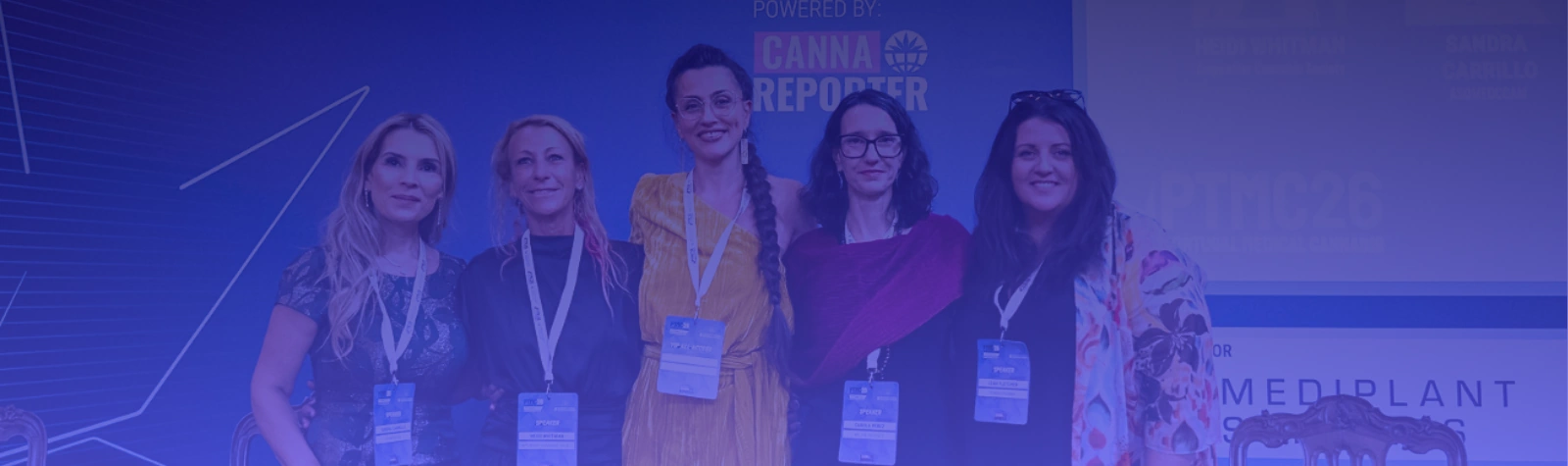
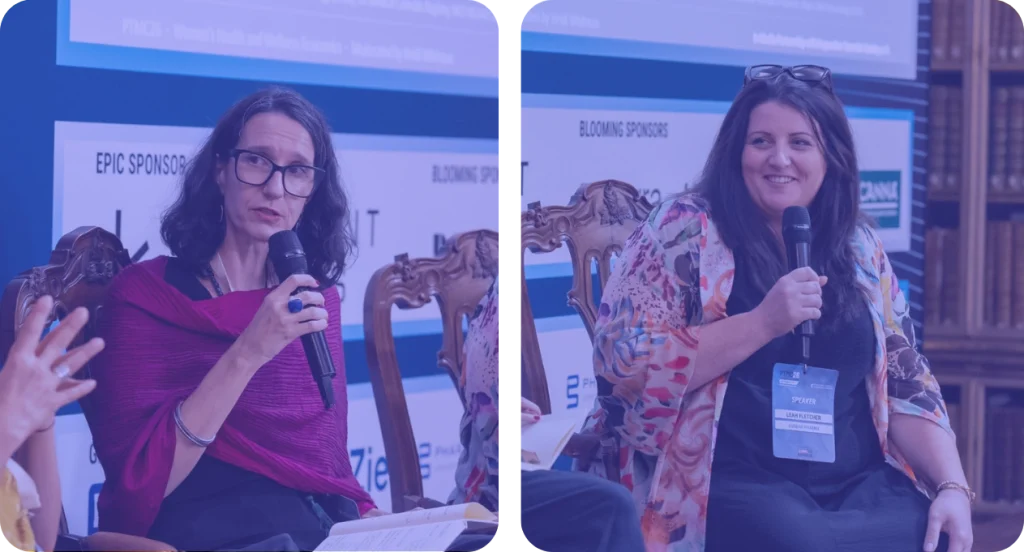
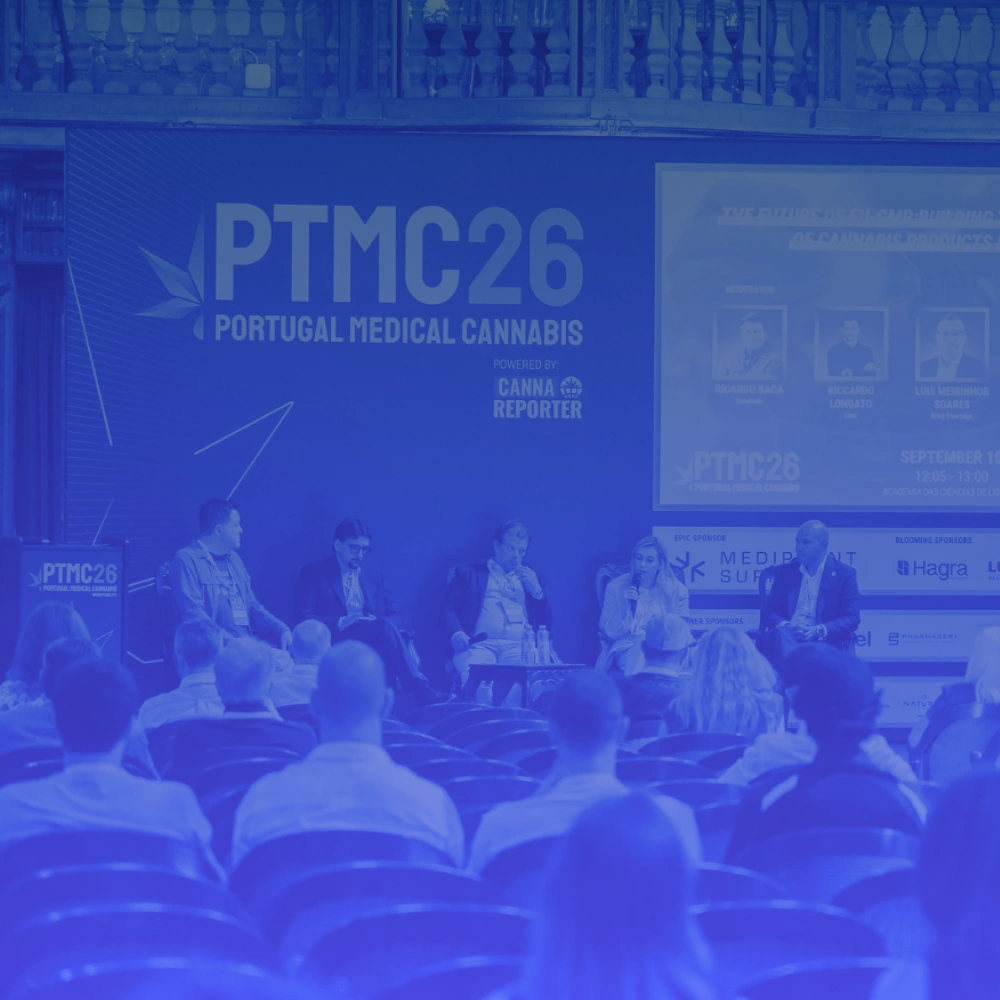
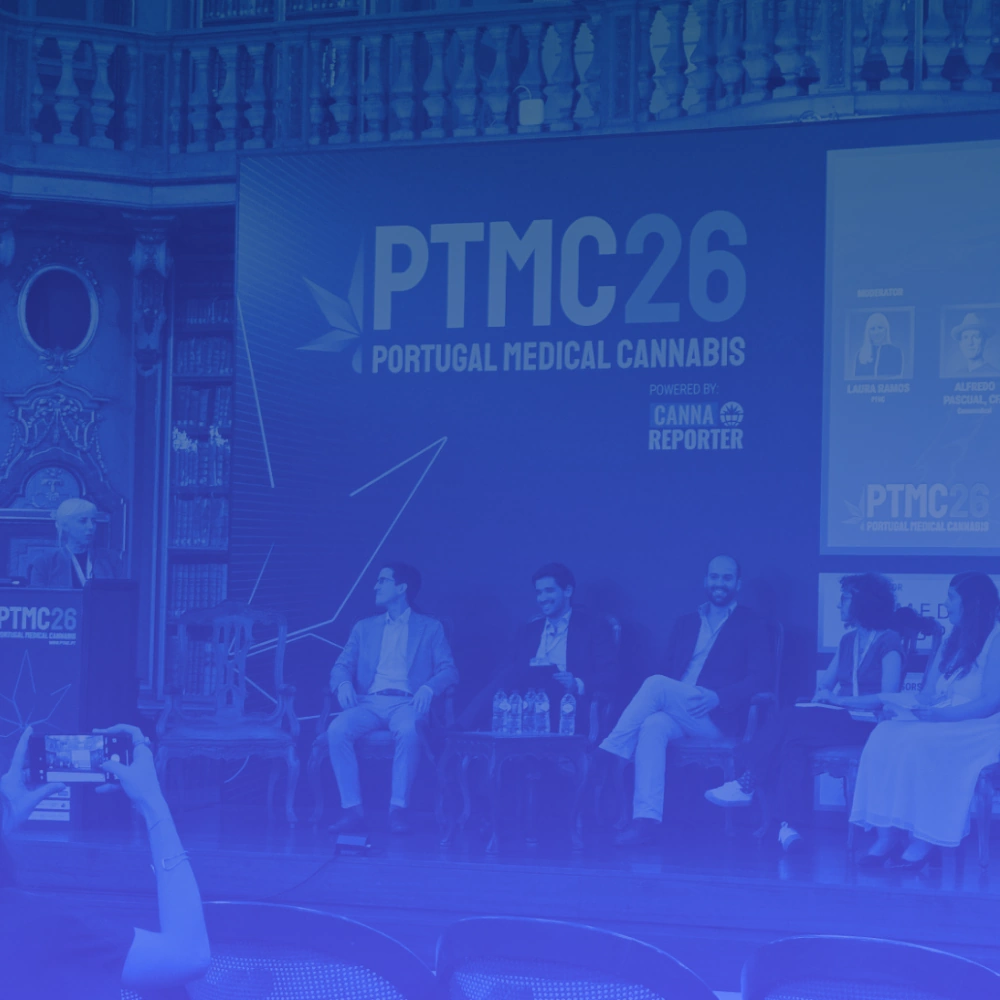
Insights extracted from a panel discussion at PTMC – Portugal Medical Cannabis on September 10, 2026. Panellists: Sandra Carrillo (ASOMEDCCAM), Shabnam Sarshar (The Recalibration), Carola Pérez (We, The Patients) and Leah Fletcher (Dunbar Pharma). Moderated by Heidi Whitman (EmpowHer Cannabis Society). Event photo credits: Renato Velasco
Fourteen Days Nobody Records
In a panel titled “Women’s Health and Wellness Economics in Medicinal Cannabis” at PTMC (Portugal Medical Cannabis) 2026, moderator Heidi Whitman opened with a number about the workplace. For every day a woman is formally recorded as off sick, her research suggests roughly 14 more are spent at work, present but not productive.
Heidi, chairwoman and co-founder of EmpowHer Cannabis Society, a professional network for women in cannabis that now spans 43 countries and more than 1,000 members, asked the room to treat that presenteeism as an economic problem, one with a price tag and a potential return.
Much of that lost time, she argued, is women quietly managing symptoms that rarely get discussed at work: endometriosis, migraine, fibromyalgia, chronic pain, insomnia and menopause.
In the UK alone, absence linked to severe period pain, endometriosis, fibroids and ovarian cysts costs the economy nearly £11 billion a year. These are also conditions where research has been thin, treatment options are limited, and a growing number of patients and clinicians are turning to cannabinoid medicine. Sandra Carrillo, a physician who treats patients across Colombia and Panama, told the room that for many of the women she sees, cannabis is still prescribed as a last resort, once everything else has failed.

Zoom out and the numbers grow. The McKinsey Health Institute estimates that closing the global women’s health gap could add roughly $1 trillion a year to global GDP by 2040, through fewer health conditions, fewer early deaths and greater workforce participation. That figure covers women’s health as a whole. The question for this panel was how much of it medical cannabis could help unlock, and what the industry would need to change to get there.
To answer it, Heidi brought together four women covering the chain from clinic to boardroom. Sandra Carrillo is president of ASOMEDCCAM (the Colombian Medical Cannabis Physicians Association) and teaches cannabinoid medicine to doctors across Latin America. Shabnam Sarshar, founder of The Recalibration, works at the intersection of cannabinoid science and female physiology. Carola Pérez, a patient since the age of 11, directs the pan-European patient coalition We, The Patients. Leah Fletcher is co-founder and CEO of Dunbar Pharma, an Irish EU-GMP (EU Good Manufacturing Practice) manufacturer of high-purity cannabinoid ingredients.
Heidi set the boundaries early, telling the room: “We’re not here to tell the room that cannabis is a treatment for every female-specific condition, because it’s not.”
The case the panel built was about evidence and design. The industry already holds real-world data, motivated formulators and an increasingly receptive regulatory environment, and women’s health is still treated as an afterthought, at the moment the economic case for acting has never been clearer.
The Numbers Behind the Panel
This panel leaned harder on data than most, and the key figures check out against independent sources:
- Closing the global women’s health gap could unlock roughly $1 trillion a year in GDP by 2040, according to the McKinsey Health Institute, the figure Heidi used to frame the whole panel. McKinsey has also found that in 2020 only 1% of healthcare research and innovation went to female-specific conditions beyond oncology. Heidi added that under 2% of private healthcare capital reaches endometriosis, menopause and polycystic ovary syndrome (PCOS), and that women are diagnosed later than men for more than 700 diseases.
- In the UK, 148.8 million working days were lost to sickness or injury in 2025, with a sickness absence rate of 2.4% for women against 1.7% for men. Heidi’s own research adds a hidden layer: roughly 14 days of presenteeism for every recorded sick day, or an estimated 57.5 days a year present but not productive against four days of recorded absence. A 2024 NHS Confederation report puts the return on each extra £1 invested per woman in obstetrics and gynaecology services in England at around £11.
- Heidi pointed to a menopause gap in Europe’s largest medical cannabis market: around 11.4 million women in Germany are perimenopausal or menopausal, and fewer than 6% use hormone replacement therapy (HRT), leaving more than 10.7 million managing symptoms without it.
- Shabnam Sarshar, founder of The Recalibration, highlighted the research gap: perimenopause, a six-to-eight-year transition every woman goes through, has around 1,300 indexed studies, while erectile dysfunction, which affects roughly 40% of men, has around 17,000.
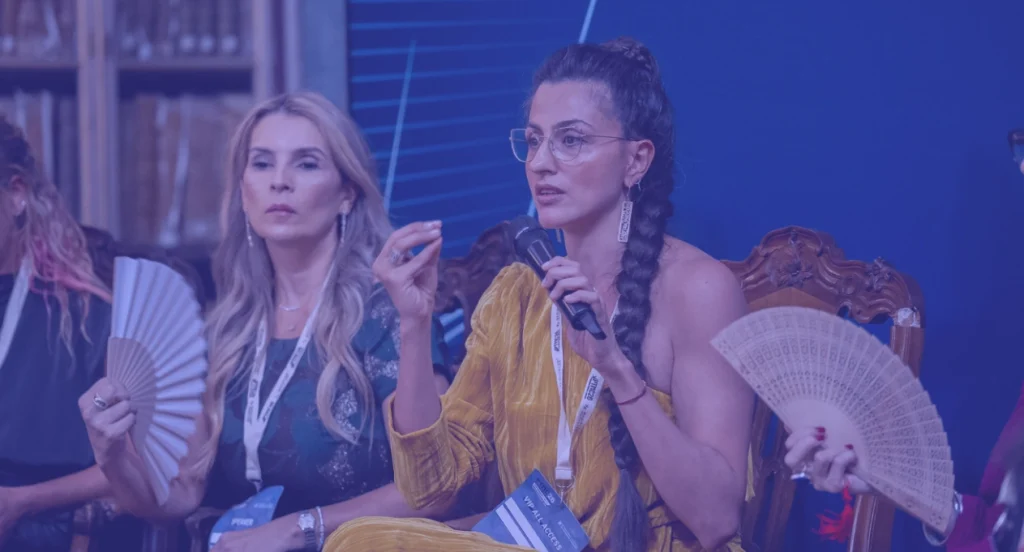
- Shabnam also cited Germany’s official survey of reimbursed cannabis treatments, the Begleiterhebung run by the Federal Institute for Drugs and Medical Devices (BfArM), in which around 54% of patients were women. She told the room women were also among the most likely to discontinue treatment, largely because of side effects, dosing and application forms that aren’t optimised for female physiology. The same survey found patients prescribed dried flower were predominantly men (67.4%), a useful reminder that Germany’s medical cannabis market serves very different patient groups through different product formats.
- Carola Pérez, director of We, The Patients and founder of the Spanish patient association Dosemociones, shared six years of patient-collected data from a patient base that is 70% female, aged 35 to 95: 70% of patients returned to work after starting treatment, 80% reduced their overall medication, and visits to emergency, primary care and specialist services fell. She said she has spent some 12,000 hours listening to patients over 14 years of advocacy.
- Sandra Carrillo, president of ASOMEDCCAM, estimated that around 65% of her own patients are women. She pointed to UK real-world evidence from Drug Science’s Project Twenty21 as a model for data the industry should build alongside randomised controlled trials (RCTs), and argued that every doctor should graduate understanding the endocannabinoid system, a call also heard from Portugal’s cross-party MPs at PTMC 2026.
5 Key Takeaways
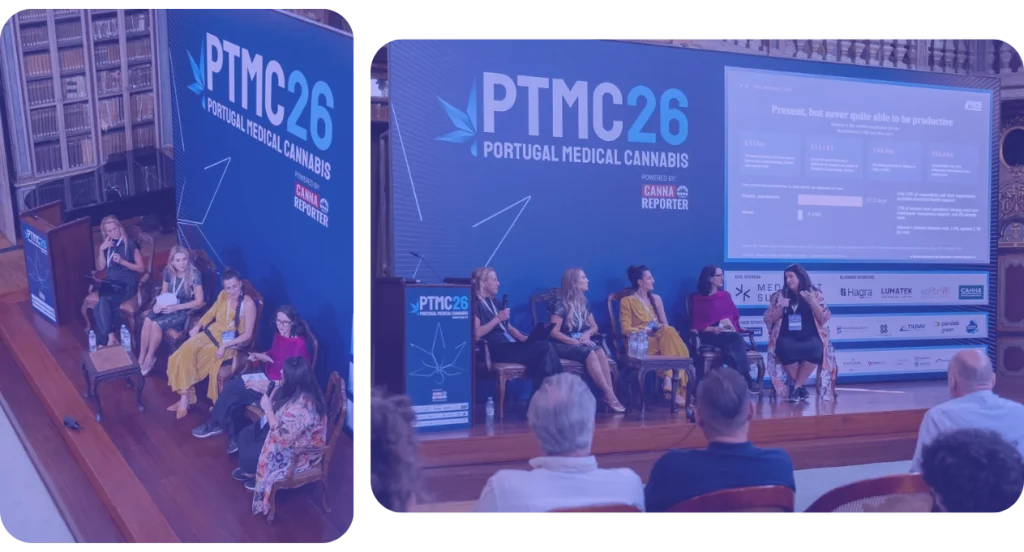
- Women’s health is an economic case, and the industry should pitch it that way. With McKinsey pricing the global women’s health gap at roughly $1 trillion a year by 2040 and UK data showing women losing more productive days than men, the panel framed women’s health in financial terms. Leah put the commercial logic plainly: women go to the pharmacy and the doctor more often, so the return on investment is there for companies able to make that case to payers, regulators and big pharma.
- Female-specific conditions are structurally understudied. Shabnam’s comparison of around 1,300 indexed studies on perimenopause with 17,000 on erectile dysfunction reflects a century in which research funding and clinical trial design treated male physiology as the default. Sandra added that strong clinical evidence for cannabinoids in endometriosis, fibromyalgia and menopause is still missing, which keeps many doctors from prescribing.
- Dosing for women has to follow hormonal cycles. Because the endocannabinoid system interacts directly with oestrogen, a fixed dose can work one month and fail the next, especially through perimenopause. Shabnam argued for products designed with that flexibility from the start, and for prescribers and caregivers willing to adjust as a woman’s needs change.
- Patients are already building the real-world evidence. Carola’s patient association has collected structured outcome data on medication use, return to work and quality of life for six years, without waiting for institutional research budgets. Sandra argued that data like this belongs alongside RCTs in the evidence base that regulators and prescribers rely on.
- Employers are the next lever for closing the gap. Heidi urged cannabis companies to act inside their own workplaces now: confidential women’s health and wellness programmes, benefits adjusted for conditions like menopause and chronic pain, and guided routes to medical cannabis, while healthcare systems and regulators catch up.
What This Means for Cannabis Employers
From where we sit, this was one of the most encouraging panels of the event. We’ve long known that women are a growing base of cannabis consumers, both as medical patients and in adult-use markets, and the prescription data backs it up: women make up around 54% of patients on reimbursed cannabis medicines in Germany, and Sandra estimated that 65% of her own patients are women. More recently, we’re seeing more women build and lead the businesses themselves. An all-women stage of founders, clinicians, a patient advocate and a pharmaceutical CEO was a clear sign of that shift, and it echoed what our team saw at the women-led industry summit during Barcelona Cannabis Week.
As recruiters, Heidi’s closing point landed hardest with us. If presenteeism costs roughly 14 days for every recorded sick day, cannabis companies are already carrying that cost in their own teams. An industry asking healthcare systems to take women’s health seriously has the chance to show it first: confidential wellness programmes, benefits that account for menopause and chronic pain, and managers who make these conversations easy to have. In a market where businesses compete hard for experienced people, that is also a retention strategy.
Carola has been making the patient case for more than a decade, including when she joined us on The Cannabis Conversation to talk about building Spain’s medical cannabis movement. Leah’s reminder that there is no point expecting pharmaceutical margins without pharmaceutical discipline ran through the rest of PTMC 2026 too, from the EU-GMP panel to the capital efficiency panel. The companies that build that discipline, with women involved in designing the products and running the businesses, will be best placed to capture the opportunity this panel described.
Notable Quotes from the Panel
"There's a trillion dollar gap. That is the scale of what could happen if we, as an industry, start taking all of what medicine has been and utilising it properly for everybody."
Heidi Whitman, Chairwoman & Co-Founder, EmpowHer Cannabis Society (moderator)
"Patients need, especially female patients, we cannot be an afterthought in any regulatory decision-making or products that this industry chooses to build. We want medicine that serves a population. It has to be built with them and not just for them."
Heidi Whitman, Chairwoman & Co-Founder, EmpowHer Cannabis Society (moderator)
"In using the cannabinoid therapies, I can see how many patients improve the quality of life. This word, quality of life, is underestimated, because people talk about migraine, headaches, endometriosis or fibromyalgia, but when you add up all the tasks that we have, cannabinoid medicine improves not just the symptoms but the quality of life of those patients."
Sandra Carrillo, President, ASOMEDCCAM
"With medical cannabis, we can target a lot of different symptoms with just one medication, so we help the patient with fewer side effects, and the burden of the cost for the healthcare system is better because we reduce the polypharmacy. It costs less to the government, and for the patients, it's better."
Sandra Carrillo, President, ASOMEDCCAM
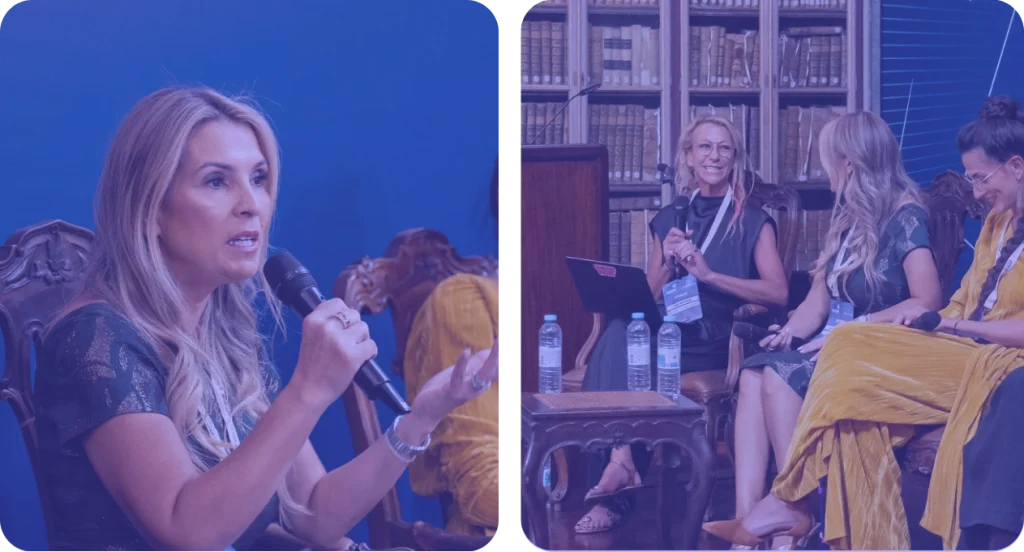
"For perimenopause, when you look at the clinical studies, we have 1,300 index studies. And when we look at erectile dysfunction, which only 40% of men may get, we have 17,000 studies. And every woman goes through the perimenopause transition."
Shabnam Sarshar, Founder, The Recalibration
"We are not talking about woman-washing. We are not talking about, 'Okay, here is the list of my product, what can I do with that?' No. Really designing product with care to woman, that's what we miss."
Shabnam Sarshar, Founder, The Recalibration
"I think they need to listen. I think they need to listen to us, to our experience, because some of the things we are saying as patients, the science confirms later when they do the trials."
Carola Pérez, Director, We, The Patients
"If things are not easy for us, we will find a way to make it easy for us. More and more, we see patients organising again in the dark, not in the light, trying to help each other because they cannot afford the medication."
Carola Pérez, Director, We, The Patients
"There's no point as an industry in expecting to have pharmaceutical margins without pharmaceutical discipline. Eventually, that's what gets you full access to a market, is that discipline."
Leah Fletcher, Co-Founder & CEO, Dunbar Pharma
"What they tend to forget is that women are consumers. We're the ones that go to the pharmacy. We will go to the doctor more often. They will get a return on investment. The risk may be higher in relation to trying to follow a moving target that is women's health, but the return on investment is there."
Leah Fletcher, Co-Founder & CEO, Dunbar Pharma
References
- NHS Confederation, “Women’s Health Economics: Investing in the 51 Per Cent” (2024)
- McKinsey Health Institute, “Closing the Women’s Health Gap: A $1 Trillion Opportunity to Improve Lives and Economies”
- McKinsey & Company, “Unlocking Opportunities in Women’s Healthcare” (2022)
- Office for National Statistics, “Sickness Absence in the UK Labour Market: 2025”
- BfArM, “Cannabis als Medizin: BfArM veröffentlicht Abschlussbericht zur Begleiterhebung” (2022)
- Lumino, “Germany’s Medical Cannabis Market – And What Could Be at Risk in 2025”
- Drug Science, “Project Twenty21 (T21)”
- Lumino, “Understanding the Endocannabinoid System with Chris Tasker, CEO of GCS”
- Lumino, “Is Portugal Falling Behind on Cannabis? Cross-Party MPs Answer at PTMC 2026”
- Lumino, “Barcelona Cannabis Week Recap: CDays, ICBC & Spannabis 2025”
- Lumino, The Cannabis Conversation, “Episode 179: Cannabis in Spain with Carola Pérez”
- Lumino, “Stop Calling It GMP-Washing! A Discussion From PTMC 2026”
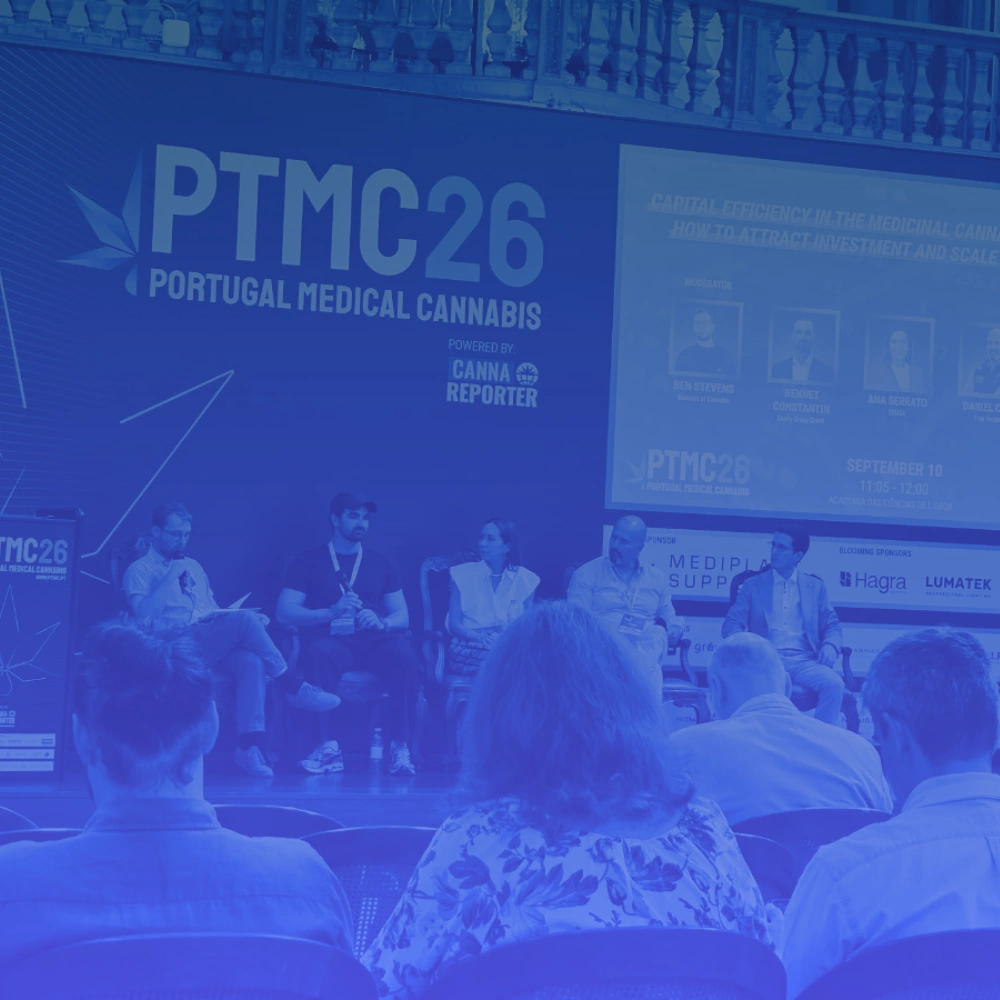
- Lumino, “Are Cannabis Investors Done Chasing Exits? Panel Insights from PTMC 2026”

 English (UK)
 Deutsch